How to Improve Mental Health: Daily Habits & Proven Strategies (Science-Backed Guide)
 Leo Thompson
Posted on
Leo Thompson
Posted on Mental health is more than just the absence of illness—it’s the foundation of how you think, feel, behave, and connect with others. It shapes your decisions, relationships, productivity, and overall quality of life.
The good news? Just like physical health, your mental well-being can be strengthened with the right habits and evidence-based strategies. This guide will show you exactly how to improve your mental health through simple daily actions and scientifically supported techniques.
Table of Contents
ToggleWhat Is Mental Health (And Why It Matters)
Mental health includes your emotional, cognitive, and social well-being. It affects how you handle stress, relate to others, and make decisions in everyday life.
Rather than focusing only on treating conditions like anxiety or depression, modern approaches—especially positive psychology—emphasize building strengths, resilience, and life satisfaction.
Why mental health matters:
- Improves focus, productivity, and decision-making
- Strengthens relationships and communication
- Boosts resilience during stressful situations
- Enhances overall life satisfaction and happiness
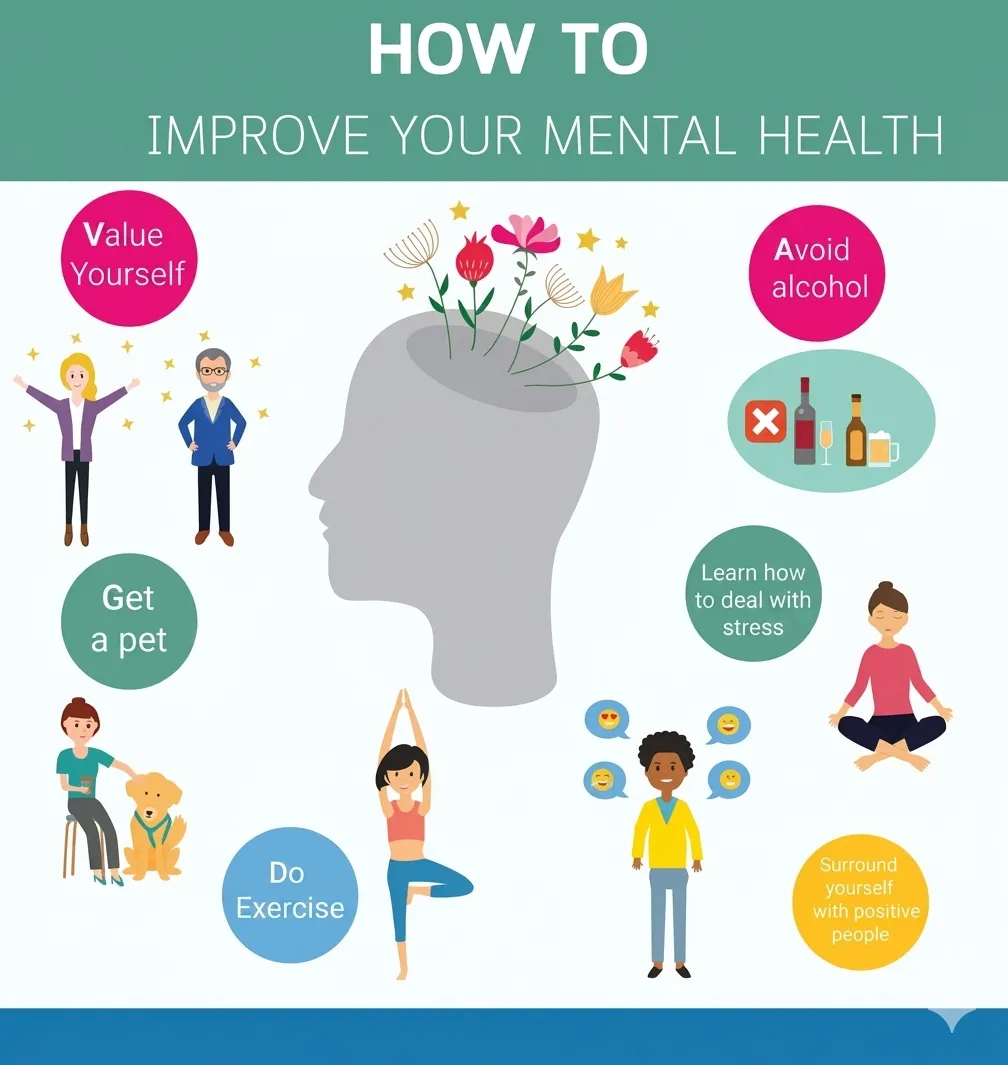
Small Daily Habits to Improve Mental Health
You don’t need drastic changes. Small, consistent habits can significantly improve your mental well-being over time.
1. Create a Meaningful Morning Routine
Start your day intentionally instead of running on autopilot. Try light stretching, journaling, or a short mental activity like a puzzle.
2. Move Your Body Daily
Physical activity releases endorphins and serotonin, which naturally boost mood and reduce stress. Even 10–15 minutes can help.
3. Stay Socially Connected
Regular interaction with friends or family reduces stress and prevents feelings of isolation.
4. Practice Gratitude
Write down three things you’re grateful for daily. This shifts your focus toward positive experiences.
5. Set Realistic Goals
Break large goals into smaller, achievable steps to avoid overwhelm and maintain motivation.
6. Take Regular Breaks
Short breaks improve concentration and prevent mental fatigue.
7. Limit Screen Time
Reduce exposure to negative news and excessive social media, which can increase anxiety.
Evidence-Based Strategies to Strengthen Mental Health
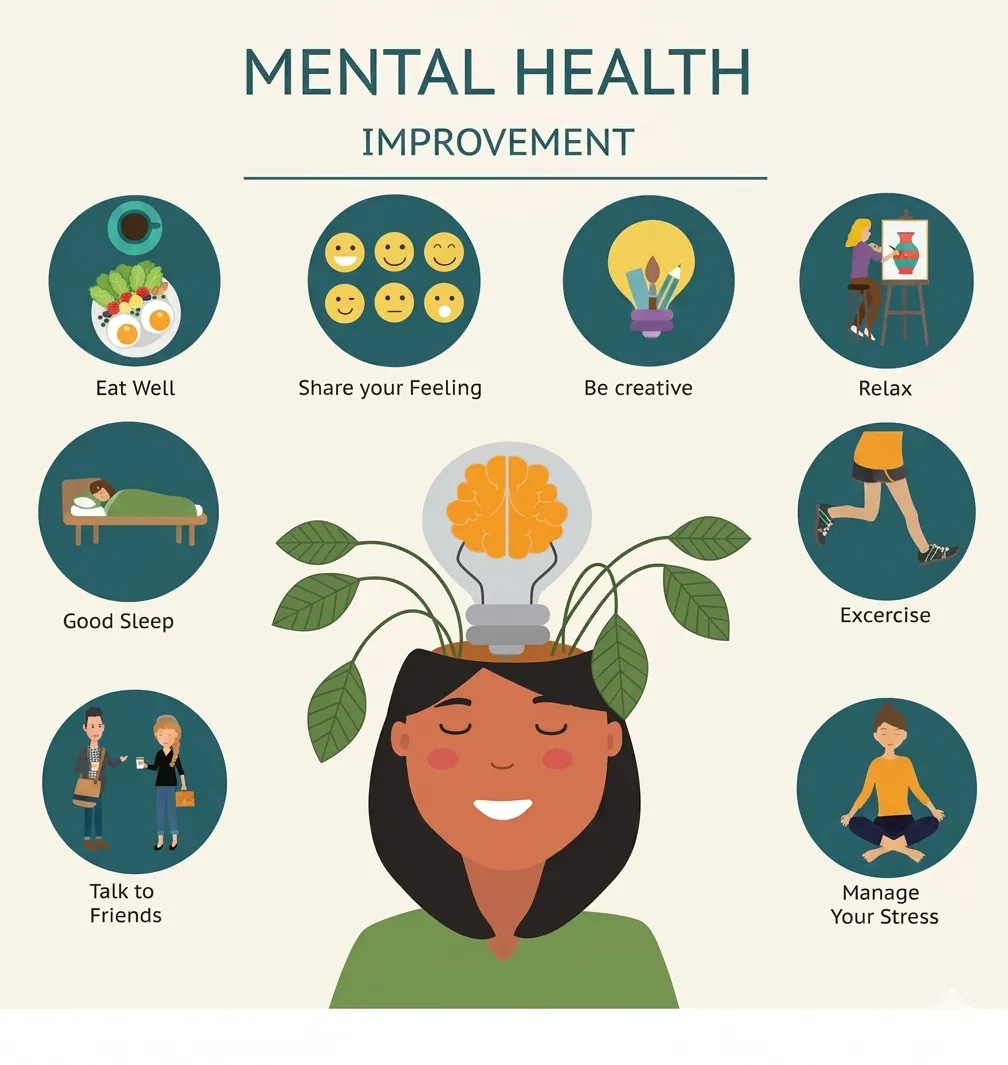
Beyond daily habits, these proven strategies can significantly enhance your mental well-being.
1. Exercise Regularly
Physical activity improves mood, reduces anxiety, and enhances cognitive function.
2. Practice Mindfulness and Meditation
Mindfulness helps you stay present and reduces stress, anxiety, and negative thinking patterns.
3. Prioritize Quality Sleep
Sleep is critical for emotional regulation and brain function. Poor sleep can worsen mood and stress levels.
4. Maintain Healthy Nutrition and Hydration
A nutrient-rich diet supports brain chemistry. Interestingly, 90–95% of serotonin is produced in the gut, linking nutrition directly to mood.
5. Build Strong Relationships
Supportive social networks are strongly linked to lower rates of depression and higher life satisfaction.
6. Seek Professional Support When Needed
Therapy and counseling are highly effective for managing stress, anxiety, and other mental health challenges.
The Role of Positive Psychology in Mental Health
Positive psychology focuses on helping you thrive, not just survive.
Key principles include:
- Strength awareness: Identify and use your personal strengths (e.g., creativity, resilience)
- Positive reframing: View challenges as opportunities for growth
- Purpose-driven living: Engage in meaningful activities
- Emotional agility: Adapt to change with flexibility and awareness
This approach builds long-term resilience and emotional stability.
How to Overcome Common Mental Health Barriers
Everyone faces obstacles. Here’s how to handle them effectively:
Dealing With Stress and Burnout
- Practice relaxation techniques (deep breathing, meditation)
- Schedule downtime regularly
Managing Low Motivation
- Start small—focus on one simple habit
- Celebrate small wins to build momentum
Handling Negative Thoughts
- Challenge unhelpful thinking patterns
- Replace them with balanced, realistic perspectives
Long-Term Tips for Mental Well-Being
To maintain strong mental health over time:
- Stay consistent with healthy habits
- Keep learning and adapting strategies
- Maintain supportive relationships
- Be patient—progress takes time
Final Thoughts
Improving mental health isn’t about perfection—it’s about consistent, intentional effort.
By combining small daily habits with science-backed strategies like exercise, mindfulness, and social connection, you can build resilience, improve emotional balance, and create a more fulfilling life.
Remember: your mental health deserves the same care and attention as your physical health.
Frequently Asked Questions (FAQs)
1. Can I improve my mental health naturally?
Yes. Daily habits like exercise, good sleep, social connection, and mindfulness can significantly improve mental health.
2. How long does it take to see improvements?
Some benefits (like mood boosts from exercise) are immediate, while long-term changes may take several weeks.
3. Do I need therapy to improve mental health?
Not always, but professional support can be highly beneficial, especially for persistent or severe issues.
4. What is the fastest way to boost mood?
Physical movement, social interaction, and gratitude exercises can quickly improve mood.
5. Is mental health as important as physical health?
Absolutely. Both are deeply connected and equally important for overall well-being.