

Creating a healthy diet meal plan is one of the most effective ways to improve your overall well-being—both now and in the long run. The food choices you make every day can either support your health or increase your risk of chronic conditions like diabetes, high blood pressure, and heart disease.
If you want to feel more energized, maintain a healthy weight, and protect your future health, this guide will walk you through practical and science-based steps to build a balanced diet.
Why a Healthy Diet Meal Plan Matters

Most people eat multiple times a day—sometimes out of hunger, sometimes out of habit. But every meal is an opportunity to either nourish your body or harm it.
A well-planned diet helps:
Provide essential nutrients
Maintain healthy body weight
Reduce the risk of chronic diseases
Improve energy and focus
The key is not restriction—it’s balance, variety, and smart choices.
1. Use the “Healthy Plate” Method
A simple way to build a balanced meal is by following the Healthy Plate model, which ensures you get the right mix of nutrients.
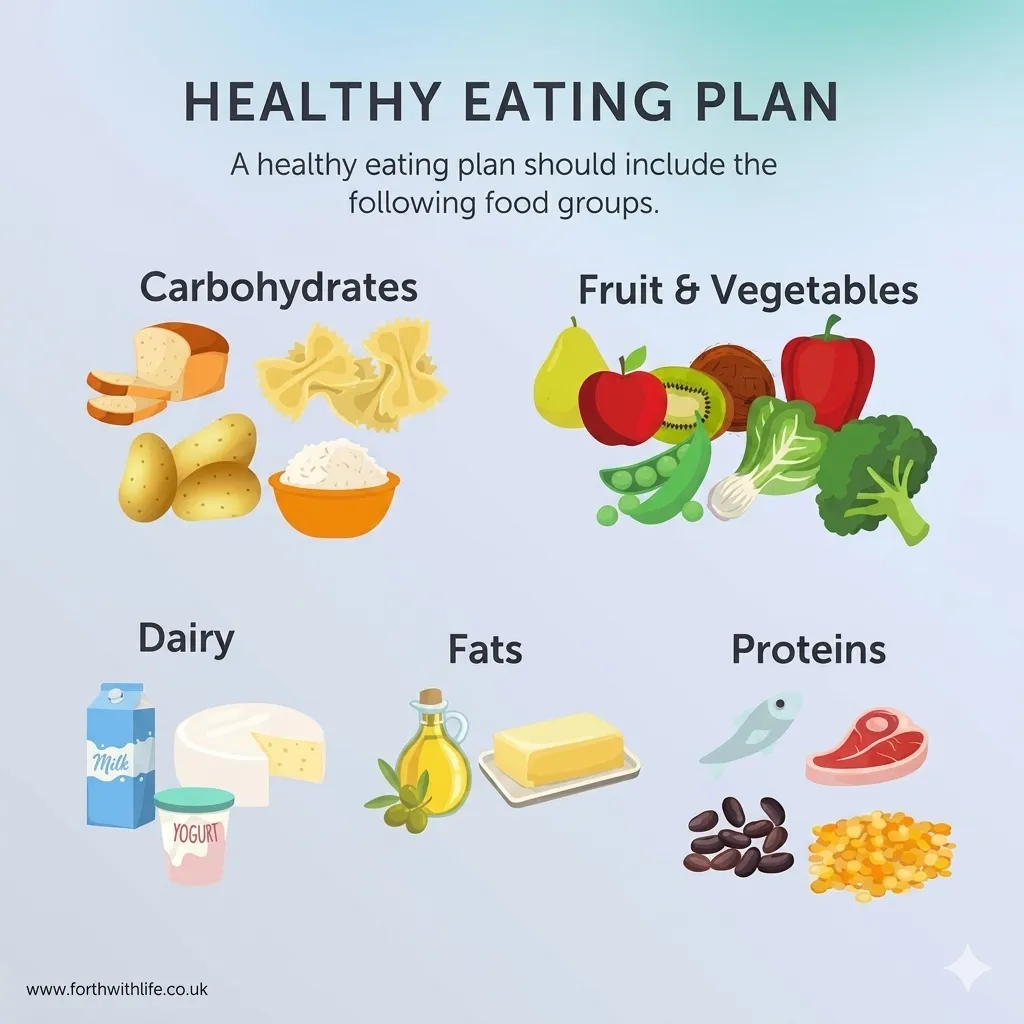
Ideal Plate Composition:
½ plate: Fruits and vegetables
¼ plate: Whole grains
¼ plate: Protein sources
This approach ensures your meals include all major food groups without overcomplicating your diet.
2. Eat Enough Whole Grains
Whole grains are an essential part of a healthy diet. Unlike refined grains, they retain valuable nutrients such as:
B vitamins and vitamin E
Minerals like iron, zinc, and magnesium
Dietary fiber and beneficial plant compounds
Healthy Whole Grain Options:
Brown rice
Wholemeal bread
Oats
Wholegrain pasta
Regular consumption of whole grains can:
Reduce the risk of heart disease
Improve digestion
Help with weight management
3. Include Fruits and Vegetables Daily
Fruits and vegetables are rich in vitamins, minerals, and antioxidants. They are naturally low in fat and high in fiber, making them essential for a balanced diet.
Tips to Maximize Benefits:
Eat at least 2 servings of fruits and 2 servings of vegetables daily
Choose a variety of colors (green, red, orange, purple)
Avoid overcooking vegetables to preserve nutrients
Prefer whole fruits over fruit juices
Colorful produce contains protective compounds that help reduce the risk of diseases like cancer and heart disease.
4. Get Enough Protein
Protein is vital for building and repairing tissues, supporting muscle health, and maintaining overall body function.
Good Protein Sources:
Lean meat, fish, and poultry
Eggs
Dairy products (milk, yogurt, cheese)
Plant-based options (lentils, beans, nuts, seeds)
For optimal health, include a mix of animal and plant-based proteins, and choose options low in saturated fat, sugar, and sodium.
5. Focus on Calcium for Strong Bones
Calcium plays a crucial role in maintaining strong bones and teeth and reducing the risk of osteoporosis.
Best Sources of Calcium:
Milk, yogurt, and cheese
Tofu and soy products
Small fish with edible bones
Leafy green vegetables
If needed, you can also include calcium-fortified foods such as plant-based milk or cereals.
6. Choose Healthier Fats
Not all fats are bad. The key is to choose the right types.
Healthy Fat Choices:
Olive oil
Canola oil
Soybean oil
Nuts and seeds
Limit:
Saturated fats (found in fatty meats and butter)
Trans fats (found in processed foods)
Using healthier oils in moderation supports heart health and overall wellness.
7. Limit Alcohol Intake
Alcohol provides empty calories and can interfere with weight management and overall health.
Recommended Limits:
Women: Up to 1 drink per day
Men: Up to 2 drinks per day
Reducing alcohol intake helps maintain a healthier lifestyle and prevents unnecessary calorie consumption.
Practical Daily Meal Plan Tips
To make your healthy diet sustainable:
Plan meals in advance
Control portion sizes
Eat a variety of foods
Stay hydrated throughout the day
Avoid highly processed foods
Final Thoughts
Building a healthy diet meal plan doesn’t require complicated rules. By focusing on balance, variety, and nutrient-rich foods, you can create a sustainable eating pattern that supports long-term health.
Key Takeaways:
Follow the Healthy Plate method
Prioritize whole grains, fruits, and vegetables
Include adequate protein and calcium
Choose healthy fats
Limit alcohol and processed foods
Small daily changes can lead to big improvements in your health over time. Start today by making smarter food choices—your body will thank you.