
Struggling with distractions, procrastination, or lack of focus? You’re not alone. In today’s fast-paced world, self-discipline is one of the most valuable skills you can develop. Whether your goal is to improve productivity, build healthier habits, or achieve long-term success, strengthening your willpower is essential.
This SEO-optimized guide explores the science behind self-discipline and introduces 17 practical exercises you can use daily to build lasting self-control.
What Is Self-Discipline?
Self-discipline—also known as self-control or willpower—is the ability to regulate your thoughts, emotions, and behaviors in pursuit of long-term goals. It involves:
- Resisting short-term temptations
- Delaying gratification
- Making intentional, goal-oriented decisions
Psychological research defines it as the conscious effort to override impulses and act in alignment with higher priorities.
Why Is Self-Discipline Important?
Strong self-discipline is linked to:
- Better academic and career performance
- Improved physical health and fitness
- Reduced risk of harmful behaviors
- Greater emotional stability and resilience
In fact, studies show that self-control can be a stronger predictor of success than intelligence.
The Science Behind Willpower
One popular theory is ego depletion, which suggests that willpower is a limited resource that gets used up throughout the day. However, newer research indicates that beliefs and motivation also play a critical role.
In other words:
If you believe your willpower is strong, it often becomes stronger.
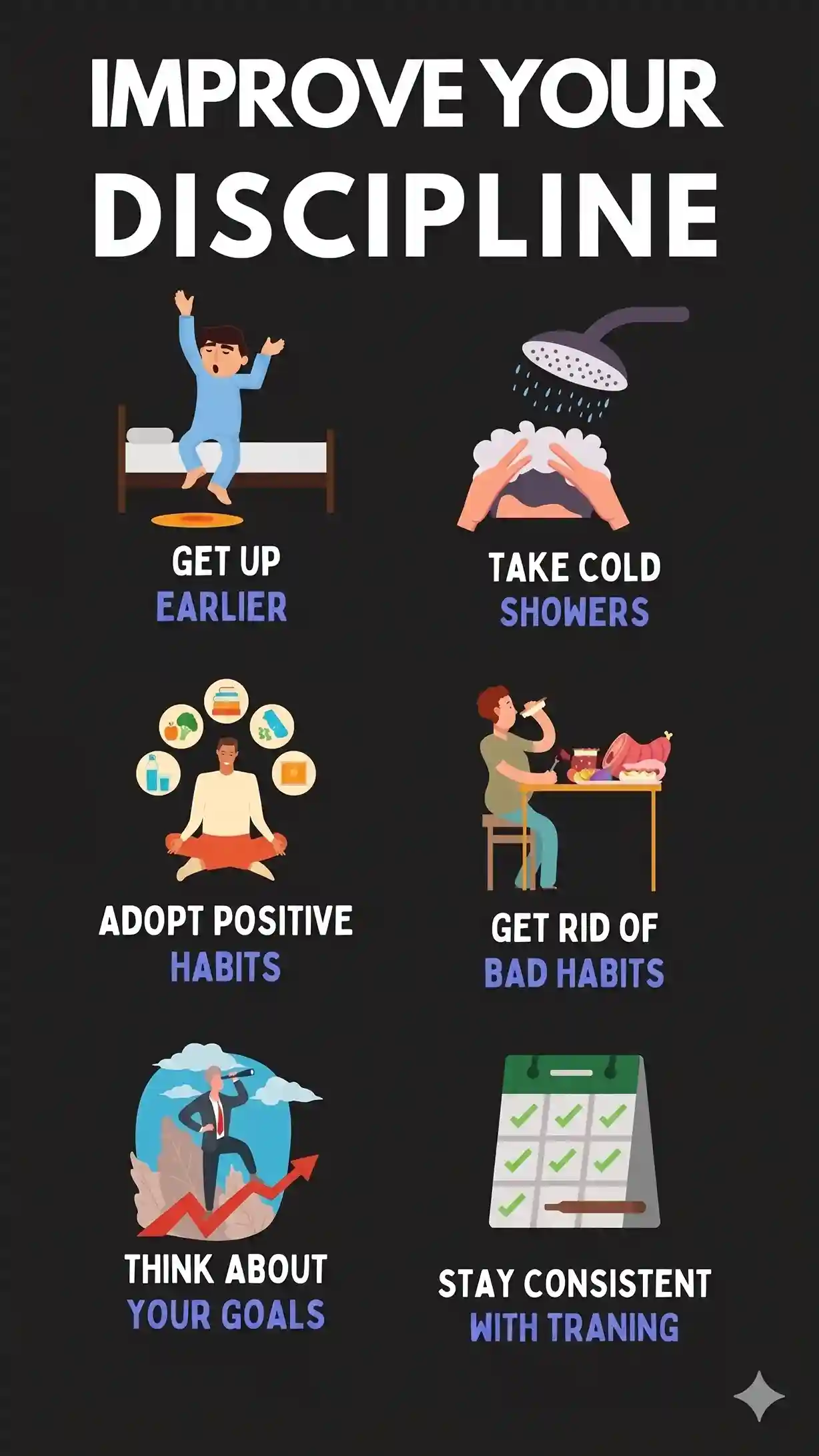
17 Self-Discipline Exercises to Improve Self-Control
1. Practice Self-Awareness
Track your behaviors, triggers, and habits. Awareness is the first step to change.
2. Use the “If–Then” Strategy
Create clear plans:
- If I feel distracted → I will focus for 5 minutes.
3. Start Small
Build discipline with small, manageable actions rather than drastic changes.
4. Delay Gratification
Pause before acting on impulses. Even a short delay strengthens control.
5. Remove Temptations
Design your environment to reduce distractions and bad habits.
6. Exercise Regularly
Physical activity improves mental discipline and emotional regulation.
7. Build Consistent Routines
Daily structure reduces decision fatigue and increases consistency.
8. Practice Mindfulness
Meditation and deep breathing help you stay calm and focused.
9. Track Your Progress
Use journals or apps to monitor habits and stay accountable.
10. Strengthen Your “Why”
Connect your actions to meaningful long-term goals.
11. Use Positive Reinforcement
Reward yourself for small wins to reinforce good behavior.
12. Limit Decision Overload
Simplify choices (e.g., meal prep, fixed schedules).
13. Train Your Focus
Work in short, focused intervals (e.g., Pomodoro technique).
14. Reframe Your Mindset
View discipline as a skill—not a limitation.
15. Practice Saying “No”
Set boundaries to protect your time and energy.
16. Reflect Daily
Ask yourself:
- What did I do well?
- What can I improve?
17. Repeat Self-Control Daily
Like a muscle, self-discipline strengthens with consistent use.
Self-Discipline in Children
Research shows that self-control begins early in life. Studies on delayed gratification (like the famous marshmallow experiment) found that children who practiced patience often achieved better outcomes later in life.
How to Build Self-Discipline in Kids:
- Create a trustworthy environment
- Encourage practice and repetition
- Reward positive behavior
- Model self-control
- Provide motivation and guidance
Practical Tools to Improve Self-Control
1. Accountability Journaling
Track habits, emotions, and triggers daily.
2. Spheres of Control Exercise
Focus only on what you can control to reduce stress and increase effectiveness.
3. Self-Control Worksheets
Use structured exercises to identify behaviors and improve responses.
Common Challenges (and How to Overcome Them)
- Low motivation: Reconnect with your purpose
- Frequent distractions: Optimize your environment
- Inconsistency: Build routines, not reliance on motivation
- Setbacks: Treat them as learning opportunities
Key Takeaways
- Self-discipline is learnable, not fixed
- Small daily actions create long-term results
- Awareness + strategy = sustainable change
- Consistency matters more than perfection
Final Thoughts
Building self-discipline isn’t about forcing yourself to be perfect—it’s about training your mind to make better choices over time. With these 17 exercises, you can gradually strengthen your willpower, improve your focus, and take control of your daily life.
Start small. Stay consistent. And remember:
Self-discipline is the bridge between goals and achievement.
FAQs
How long does it take to build self-discipline?
It varies, but noticeable improvements can occur within a few weeks of consistent practice.
Can self-discipline be learned?
Yes. It’s a skill that improves with repetition and awareness.
What’s the fastest way to improve willpower?
Start with small habits, remove distractions, and use clear action plans.
Is motivation or discipline more important?
Discipline is more reliable—motivation fluctuates, but habits sustain progress.