

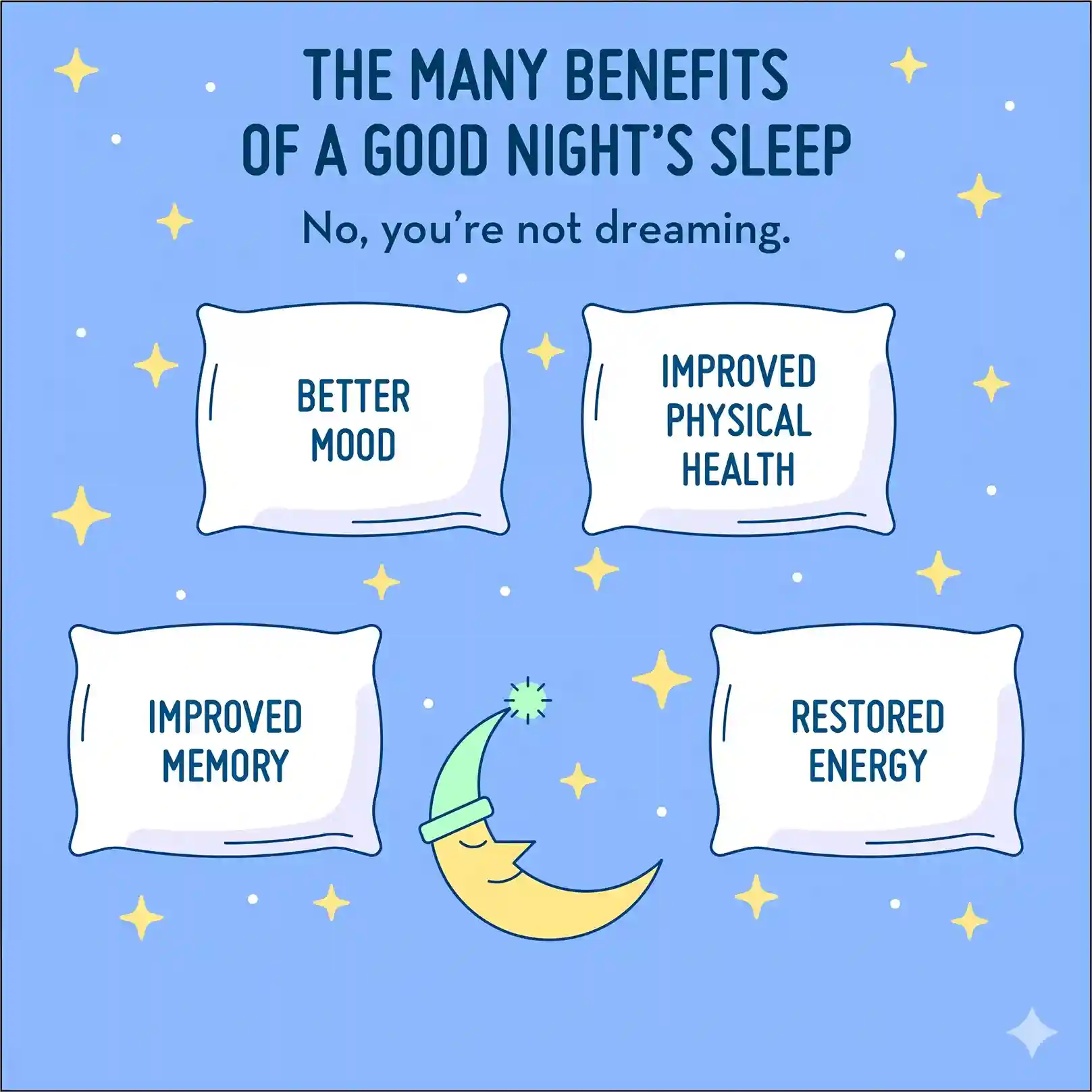
Getting a good night’s sleep is not just about feeling rested—it’s essential for your **physical health, mental clarity, and overall well-being**.
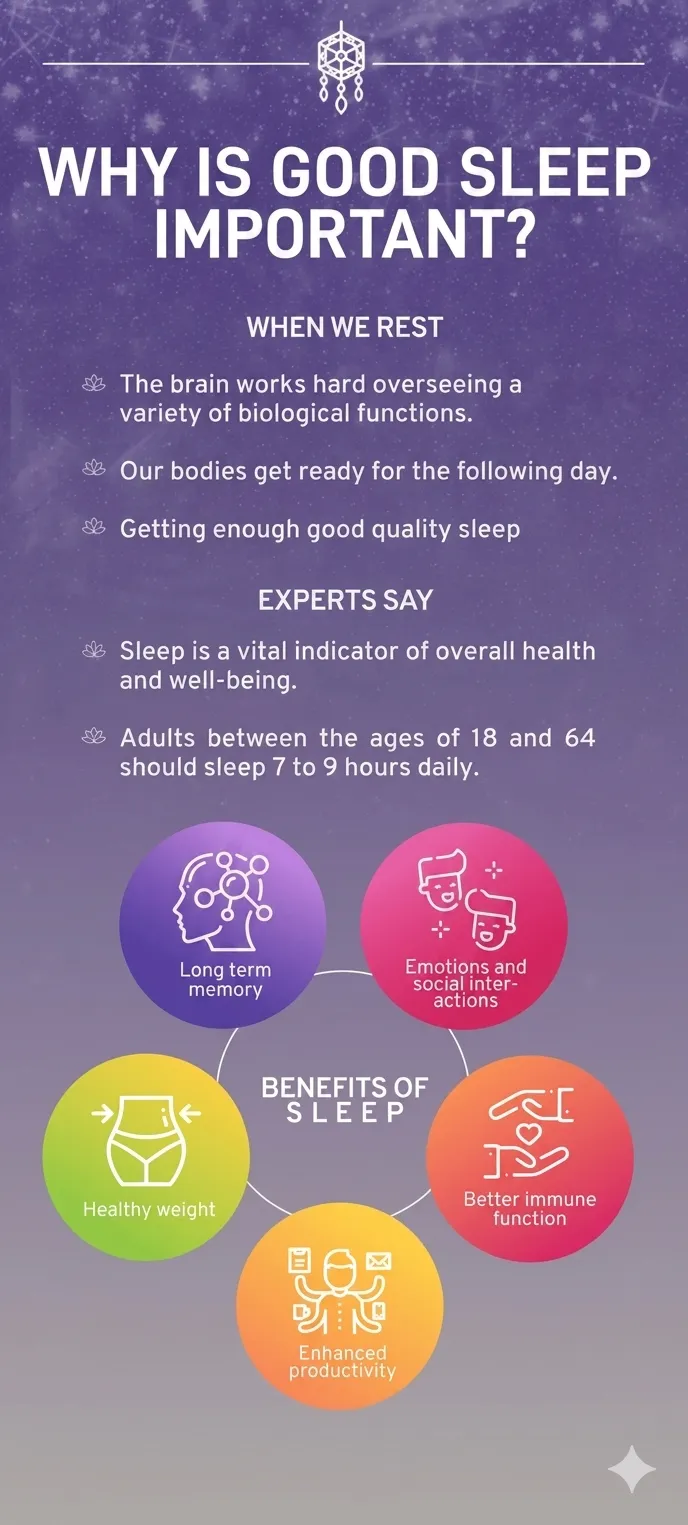
Research shows that adults aged 18–60 should get at least **7 hours of sleep per night** to function optimally. Without enough sleep, your body and mind begin to suffer in ways you might not immediately notice.
In this guide, we’ll explore **why sleep is so important** and share practical tips to help you improve your sleep quality.
—
## 1. Sleep Helps Your Body Repair and Recover
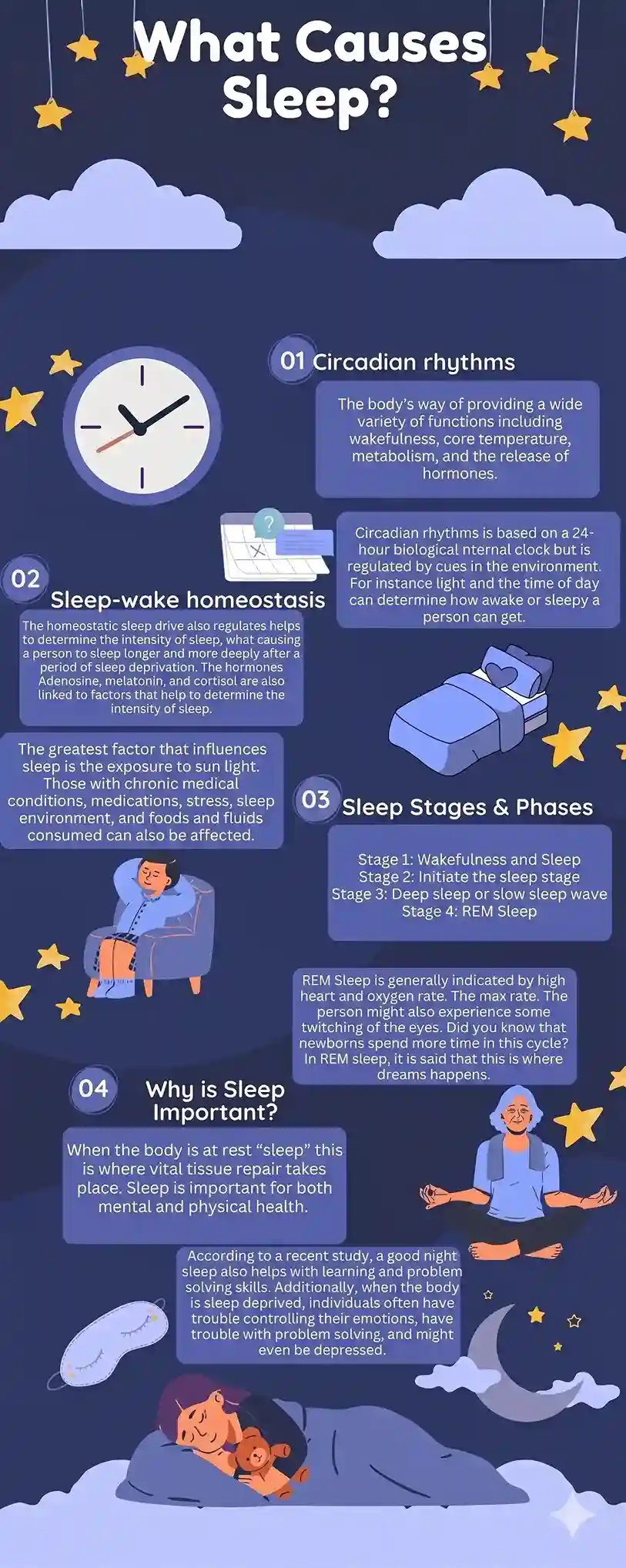
Sleep is a restorative process where your body repairs itself.
During sleep, your body:
* Repairs muscles and tissues
* Produces essential hormones
* Supports protein synthesis
* Strengthens the immune system
👉 **Key insight:** While you sleep, your body is actively working to keep you healthy.
—
## 2. Sleep Reduces Stress and Improves Focus
A good night’s sleep plays a crucial role in managing stress.
**Benefits of proper sleep:**
* Improves concentration and decision-making
* Regulates mood
* Helps you cope better with daily challenges
Lack of sleep can increase cortisol (stress hormone) levels and disrupt melatonin production, making it harder to relax and fall asleep.
👉 **Result:** Better sleep = better mental performance and emotional balance.
—
## 3. Sleep Enhances Memory and Learning
Sleep is essential for processing and storing information.
During sleep:
* Your brain organizes daily experiences
* Strengthens neural connections
* Improves memory retention
👉 **Why it matters:** Quality sleep helps you learn faster and remember more.
—
## 4. Sleep Supports Healthy Body Weight
Sleep directly affects hormones that control hunger and appetite.
When you don’t get enough sleep:
* **Leptin (fullness hormone)** decreases
* **Ghrelin (hunger hormone)** increases
This imbalance can lead to:
* Increased cravings (especially for junk food)
* Overeating
* Weight gain
👉 **Tip:** Good sleep habits support better weight management.
—
## 5. Sleep Helps Prevent Chronic Illness
Sleep deprivation has been linked to several serious health conditions.
### Increased Risk of:
* Heart disease
* Diabetes
* High blood pressure
* Respiratory infections
Poor sleep also weakens your immune system, making you more vulnerable to illness.
👉 **Bottom line:** Sleep is a key factor in long-term disease prevention.
—
## 6. Sleep Is Essential for Mental Health
Sleep and mental health are deeply connected.
Lack of sleep can lead to:
* Anxiety and depression
* Irritability and mood swings
* Difficulty concentrating
Sleep problems like insomnia are often both a **cause and symptom** of mental health conditions.
👉 **Reminder:** Prioritizing sleep is essential for emotional well-being.
—
## Common Signs of Sleep Deprivation
If you’re not getting enough sleep, you may experience:
* Daytime fatigue
* Poor focus
* Mood changes
* Increased stress
* Frequent illness
👉 **Warning:** Chronic sleep deprivation can seriously impact your health over time.
—
## How to Improve Your Sleep Quality
Improving your sleep doesn’t require drastic changes—small habits can make a big difference.
### Simple Sleep Tips:
* Stick to a consistent sleep schedule
* Keep your bedroom cool, dark, and quiet
* Avoid screens before bedtime
* Limit caffeine and alcohol in the evening
* Exercise regularly during the day
👉 **Pro tip:** Even small improvements in your routine can lead to better sleep and better health.
—
## Final Thoughts
Sleep is one of the most important pillars of a healthy lifestyle. It affects everything—from your brain function and mood to your weight and immune system.
**Don’t underestimate the power of a good night’s sleep.**
Start prioritizing your rest today, and your body will reward you with better energy, focus, and long-term health.
—
*Disclaimer: This article is for informational purposes only and does not replace professional medical advice. Always consult a healthcare professional for personalized guidance.*