
What to Eat Before and After a Workout (Based on Your Workout Type)
 Leo Thompson
Posted on
Leo Thompson
Posted on Fueling your body properly is just as important as the workout itself. Whether your goal is fat loss, muscle gain, or overall fitness, what you eat before and after exercise can directly impact your performance, recovery, and long-term results.
But here’s the truth: there’s no one-size-fits-all nutrition plan. The right approach depends on your workout type, timing, and fitness goals. In this guide, you’ll learn exactly what to eat before and after workouts to maximize your results.
Table of Contents
ToggleWhy Workout Nutrition Timing Matters
When you exercise, your body uses fuel differently than at rest. That’s why your pre- and post-workout meals should be strategic.
Here are the key components to focus on:
Carbohydrates (Energy Source)
Carbs are your body’s primary fuel. They break down into glucose, which powers muscle contractions and keeps your energy levels stable.
Protein (Muscle Repair & Growth)
Exercise creates tiny tears in muscle fibers. Protein helps repair and rebuild them—making your muscles stronger over time.
Hydration (Performance & Recovery)
Water supports everything from endurance to muscle function. Even mild dehydration can reduce performance.
Timing (Performance Optimization)
Eating too early, too late, or too much can negatively affect your workout. Timing your meals correctly helps you perform better and recover faster.

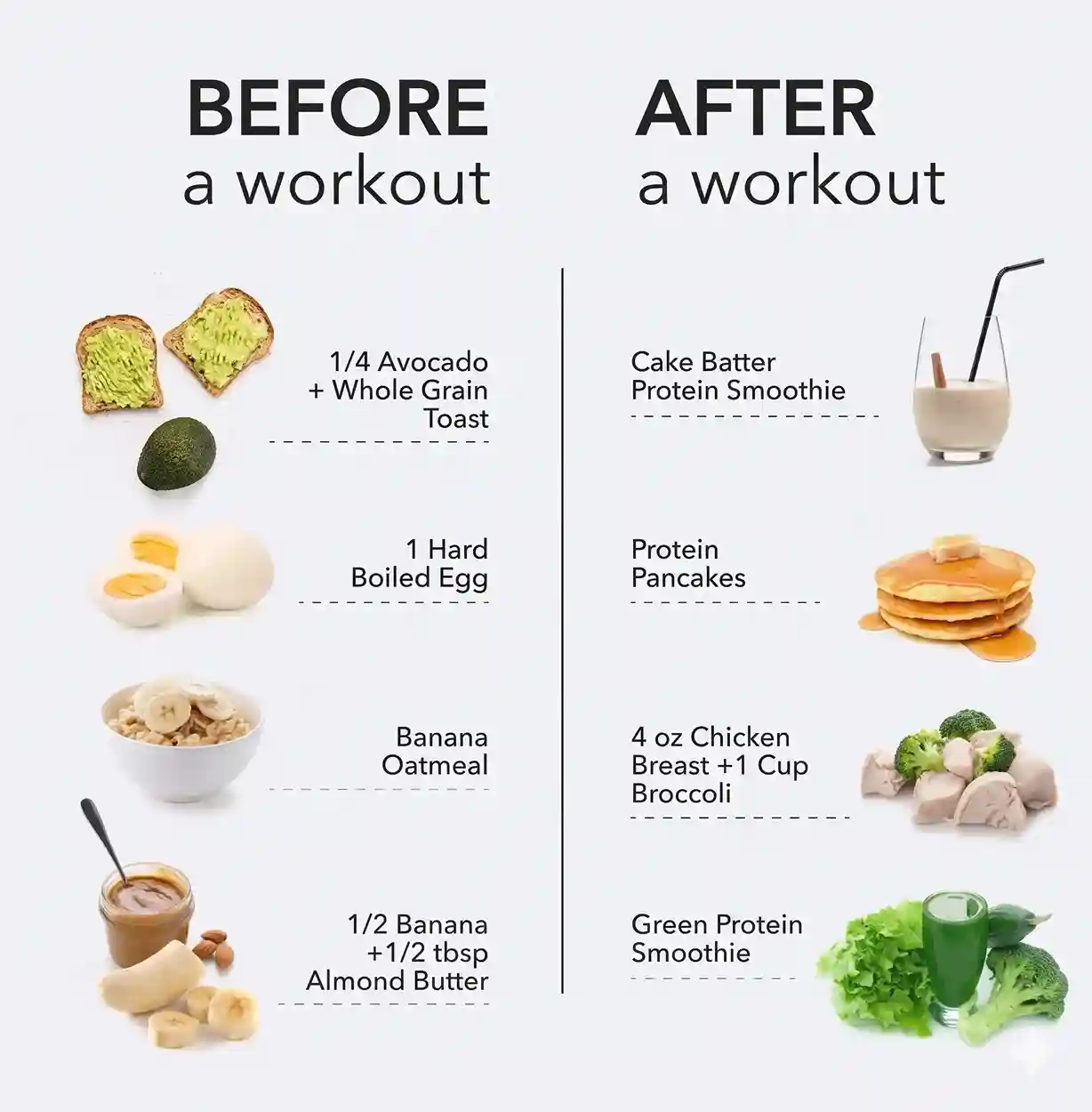
What to Eat Before Your Workout
Your pre-workout meal should match your activity. Different workouts require different types of fuel.
🏃♂️ Before Cardio (Running, Cycling, HIIT)
For endurance-based workouts, your goal is sustained energy and reduced fatigue.
1–3 hours before:
- Oatmeal with banana
- Whole-grain toast with peanut butter
- Yogurt with fruit
30–60 minutes before:
- Banana
- Energy bar
- Small smoothie
Avoid:
- High-fat foods
- High-fiber meals (can cause digestive discomfort)
🏋️ Before Strength Training (Weightlifting)
Strength workouts require both energy and muscle support.
1–3 hours before:
- Chicken with rice
- Eggs and whole-grain toast
- Greek yogurt with berries
30 minutes before (optional):
- Cheese and crackers
- Carrots with hummus
If you’re not hungry, you can skip the snack—but never train completely depleted.
🧘 Before Yoga, Pilates, or Stretching
Flexibility workouts require light, comfortable fuel.
1–2 hours before:
- Fruit smoothie
- Toast with almond butter
Avoid:
- Heavy meals
- Fried foods
- Gas-producing foods (beans, broccoli, cabbage)
Pro tip: Stay well-hydrated before starting.
What to Eat After Your Workout
After exercise, your body enters recovery mode—repairing muscles and replenishing energy stores.
While some experts suggest a 30–60 minute “anabolic window,” others believe you have several hours. The best approach? Listen to your body.
🏃♂️ Post-Cardio Recovery
Focus on replenishing energy and hydration.
Good options:
- Chocolate milk
- Fruit smoothie with protein
- Hummus with whole-grain pita
💪 After Strength Training
Prioritize protein + complex carbs for muscle repair.
Best choices:
- Grilled chicken with sweet potatoes
- Protein shake with banana
- Tuna sandwich
🧘 After Yoga or Light Workouts
Keep recovery light and hydrating.
Try:
- Coconut water
- Yogurt
- Fruit with nuts or seeds
Hydration: The Often Overlooked Key
Hydration is essential before, during, and after workouts.
- Drink water consistently throughout the day
- Use electrolyte drinks after intense sessions
- Watch for signs of dehydration (fatigue, headaches, dizziness)
Smart Nutrition Tips for Every Workout
No matter your training style, these principles apply:
✔️ Don’t Train on Empty
Your body needs fuel for performance and recovery.
✔️ Avoid Fad Diets
Extreme fasting or unproven supplements can harm performance and health.
✔️ Listen to Your Body
If certain foods cause discomfort, adjust your plan.
✔️ Prioritize Protein
Protein needs vary based on body weight and training intensity.
✔️ Stay Consistent
Consistency matters more than perfection.
When to Seek Professional Advice
If you’re unsure how to structure your nutrition—or if you have specific goals like weight loss or muscle gain—consider consulting a registered dietitian or healthcare provider.
They can help you:
- Customize your nutrition plan
- Optimize performance
- Avoid common mistakes
Final Thoughts
Your workouts are only half the equation—nutrition is what drives results.
- Eat carbs for energy
- Eat protein for recovery
- Hydrate consistently
- Adjust meals based on your workout type
When you align your nutrition with your training, you’ll not only perform better—you’ll recover faster and see results sooner.
FAQs
What should I eat before a workout?
Focus on carbs for energy and a small amount of protein. Keep it light and easy to digest.
Is it okay to work out on an empty stomach?
It depends, but for most people, having at least a small snack improves performance.
What is the best post-workout meal?
A combination of protein and carbohydrates is ideal for recovery.
How soon should I eat after a workout?
Within a few hours is generally fine—listen to your hunger cues.
Do I need supplements?
Not necessarily. Whole foods can provide everything most people need.
By fueling your body the right way, you turn every workout into a more effective step toward your fitness goals.