
Exercise is one of the best things you can do for your body. It improves heart health, supports weight management, boosts mood, and strengthens muscles and bones. But while most people struggle with not exercising enough, there’s another side to the story—overexercising.
Yes, it’s possible to work out too much, and doing so can actually harm your health instead of helping it.
So how do you know if you’re crossing the line? Let’s break down the signs, risks, and how to find the right balance.
How Much Exercise Is Too Much?
Health experts generally recommend:
- 150–300 minutes of moderate exercise per week, or
- 75–150 minutes of vigorous activity, plus
- Strength training at least 2 days per week
These are baseline guidelines—but there’s no strict upper limit defined. Some athletes train far beyond this safely. The key difference? They follow structured programs with proper recovery.
👉 Overexercising isn’t just about how much you do—it’s about how fast you increase intensity and how well you recover.
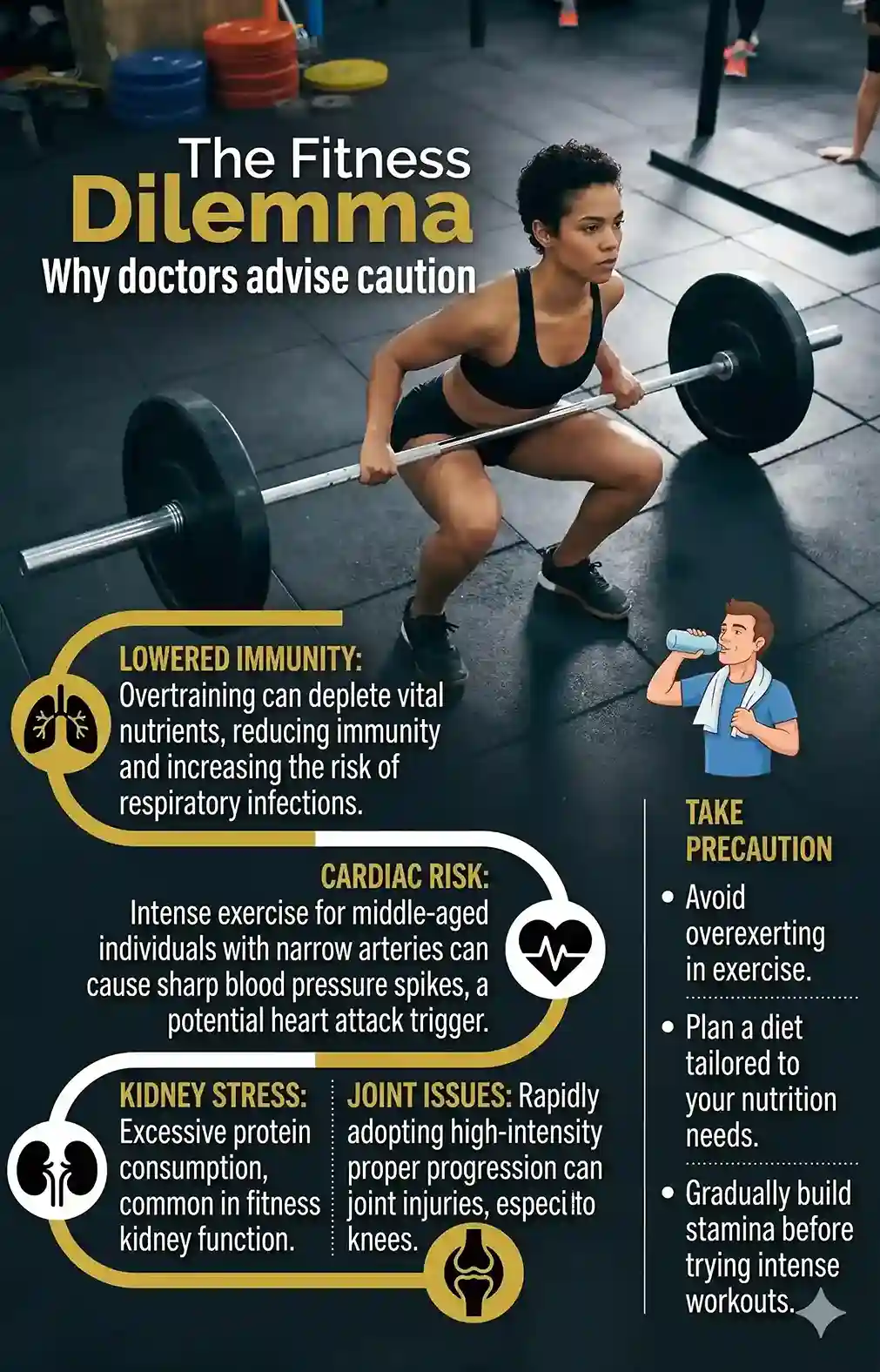
Two Common Ways People Overexercise
1. Overtraining
Overtraining happens when you push your body too hard without enough rest or recovery.
Common causes include:
- Increasing workout intensity too quickly
- Not taking rest days
- Poor nutrition or low calorie intake
- Lack of sleep
- Training while sick or stressed
2. Compulsive Exercise
This occurs when exercise becomes an obligation rather than a choice.
Warning signs:
- Feeling guilty when you skip a workout
- Anxiety or stress if you don’t exercise
- Prioritizing workouts over social life or responsibilities
Signs You’re Exercising Too Much
Overexercising often shows up through physical and mental symptoms. Watch out for these warning signs:
Physical Symptoms:
- Persistent muscle soreness (lasting more than 3–4 days)
- Frequent injuries (strains, joint pain, tendonitis)
- Constant fatigue or low energy
- Getting tired early during workouts
- Increased resting heart rate
- Weakened immune system (getting sick more often)
Performance & Progress:
- Plateau or decline in performance
- Lack of improvement despite consistent training
Mental & Emotional Signs:
- Irritability or mood swings
- Anxiety or depression
- Loss of motivation or enjoyment
- Obsessive thoughts about working out
👉 If you’re experiencing several of these symptoms, your body may be telling you to slow down.
Why Overexercising Is Risky
Short-Term Risks
Overtraining can quickly impact your daily life:
- Poor sleep quality
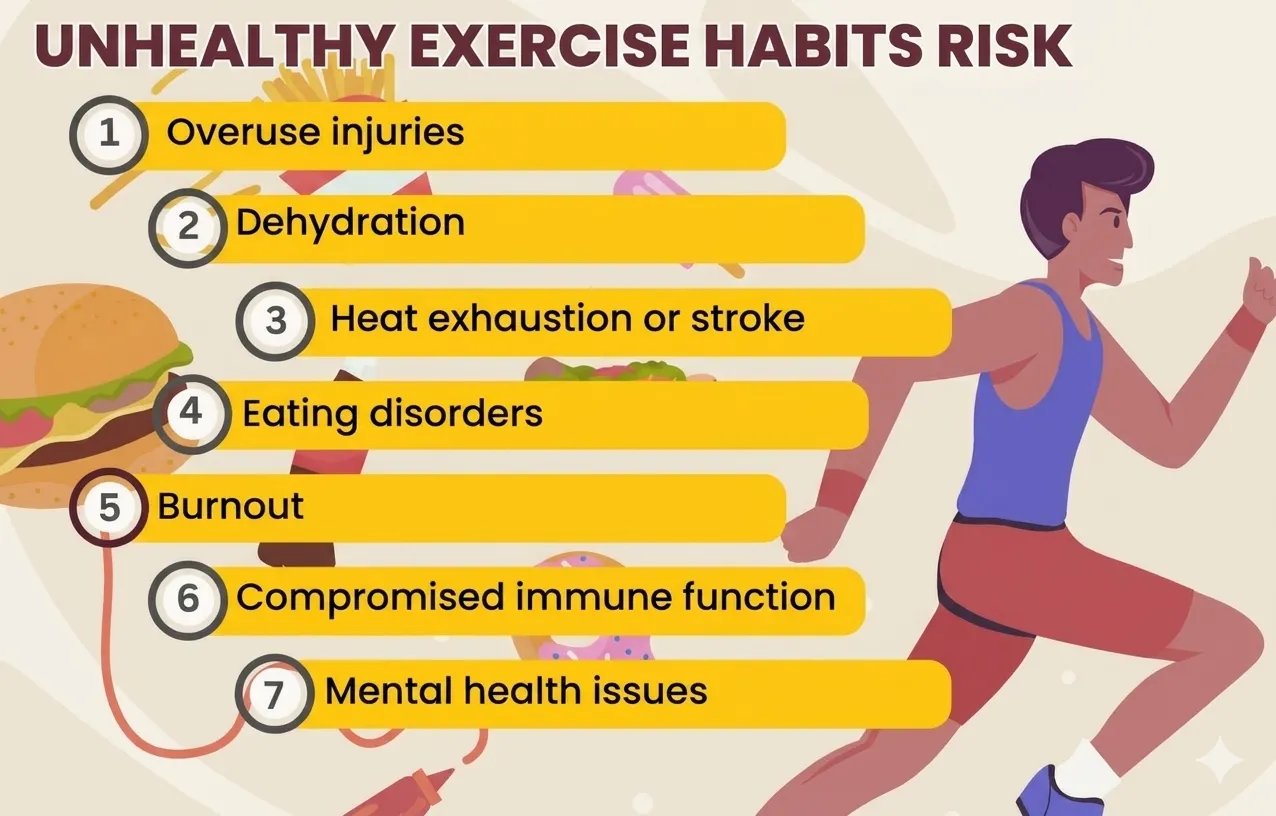
- Mood changes (irritation, stress, burnout)
- Reduced focus at work or school
- Increased injury risk
Without enough recovery, your muscles don’t have time to repair—leading to overuse injuries like:
- Tendonitis
- Muscle strains
- Joint pain
- Stress fractures
Long-Term Health Risks
If ignored, overexercising can lead to serious health issues:
1. Hormonal Imbalance
- Women may experience irregular or missed periods
- Men may have reduced testosterone and lower libido
2. Weakened Immune System
Chronic overtraining can make your body more vulnerable to illness.
3. Organ Stress
Extreme overtraining can affect the heart and kidneys, especially in severe cases.
4. Rhabdomyolysis (Rare but Serious)
This condition occurs when muscle tissue breaks down and releases harmful substances into the bloodstream.
⚠️ Warning signs include:
- Severe muscle pain
- Weakness
- Dark-colored urine
👉 This is a medical emergency and requires immediate attention.
What to Do If You’re Overexercising
The good news? Overtraining is reversible.
1. Take a Break
Start with 1–2 weeks of rest to allow your body to recover.
2. Focus on Recovery Habits
✔ Eat Properly
Fuel your body with enough calories, protein, and nutrients.
✔ Stay Hydrated
Water supports muscle recovery and overall performance.
✔ Prioritize Sleep
Aim for 7–9 hours per night to support recovery and energy.
✔ Schedule Rest Days
Take at least 1 full rest day per week and allow time between workouts.
3. Return تدريجي (Gradually)
When you resume training:
- Start with lower intensity
- Avoid jumping back into your previous routine
- Increase workload slowly
How to Prevent Overexercising
- Follow a structured workout plan
- Listen to your body
- Balance training with recovery
- Adjust workouts during stressful periods
- Avoid extreme conditions (heat, cold, fatigue)
👉 Remember: more exercise doesn’t always mean better results.
Final Thoughts
Exercise should make you feel stronger, healthier, and more energized—not exhausted or overwhelmed.
Overexercising happens when intensity outweighs recovery. By recognizing the warning signs early and prioritizing balance, you can avoid injury and continue making progress safely.
👉 The goal isn’t to train harder—it’s to train smarter.
Disclaimer
This article is for informational purposes only and does not replace professional medical advice. If you experience persistent symptoms or suspect a health issue, consult a qualified healthcare professional.