
Strength Training vs. Cardio: Which Is Better for You?
 Leo Thompson
Posted on
Leo Thompson
Posted on Walk into any gym and you’ll quickly notice two groups: those focused on cardio machines like treadmills and bikes, and those lifting weights with intensity. For years, the debate has continued—strength training vs. cardio: which is better?
The truth is, it’s not a simple either-or answer. Both forms of exercise offer unique benefits, target different systems in the body, and play essential roles in overall health and fitness. The best choice depends on your goals, lifestyle, and preferences.
In this guide, we’ll break down the science, benefits, and key differences to help you decide what works best for you.
Table of Contents
ToggleWhat Is Strength Training?
Strength training, also known as resistance training, involves exercises that improve muscle strength, endurance, and size. This includes lifting weights, using resistance bands, or performing bodyweight movements like push-ups and squats.
When you train with resistance, your muscles experience small tears. During recovery, they rebuild stronger and larger—a process called muscle hypertrophy.
Key Benefits of Strength Training:
- Builds muscle mass and strength
- Boosts metabolism (burn more calories at rest)
- Improves bone density and joint health
- Enhances insulin sensitivity
- Supports mental health and confidence
Strength training is not just about aesthetics—it’s a powerful tool for long-term health and functional fitness.
What Is Cardio?
Cardio (cardiovascular exercise) refers to activities that increase your heart rate over a sustained period. Examples include running, cycling, swimming, walking, and HIIT workouts.
Cardio primarily targets your heart and lungs, improving how efficiently your body uses oxygen.
Key Benefits of Cardio:
- Strengthens the heart and improves circulation
- Burns calories effectively
- Increases endurance and stamina
- Supports brain health and memory
- Reduces stress and boosts mood
Cardio is often associated with longevity and reducing the risk of chronic diseases like heart disease and diabetes.
The Science Behind Strength vs. Cardio
Understanding how your body produces energy helps explain the difference:
- Strength training relies on the anaerobic system, using quick bursts of energy for short, intense efforts (like lifting weights).
- Cardio uses the aerobic system, relying on oxygen to fuel longer, steady activities (like jogging or cycling).
Both systems are essential. One builds power and muscle, while the other improves endurance and recovery.
Strength Training vs. Cardio for Weight Loss
This is one of the most common questions.
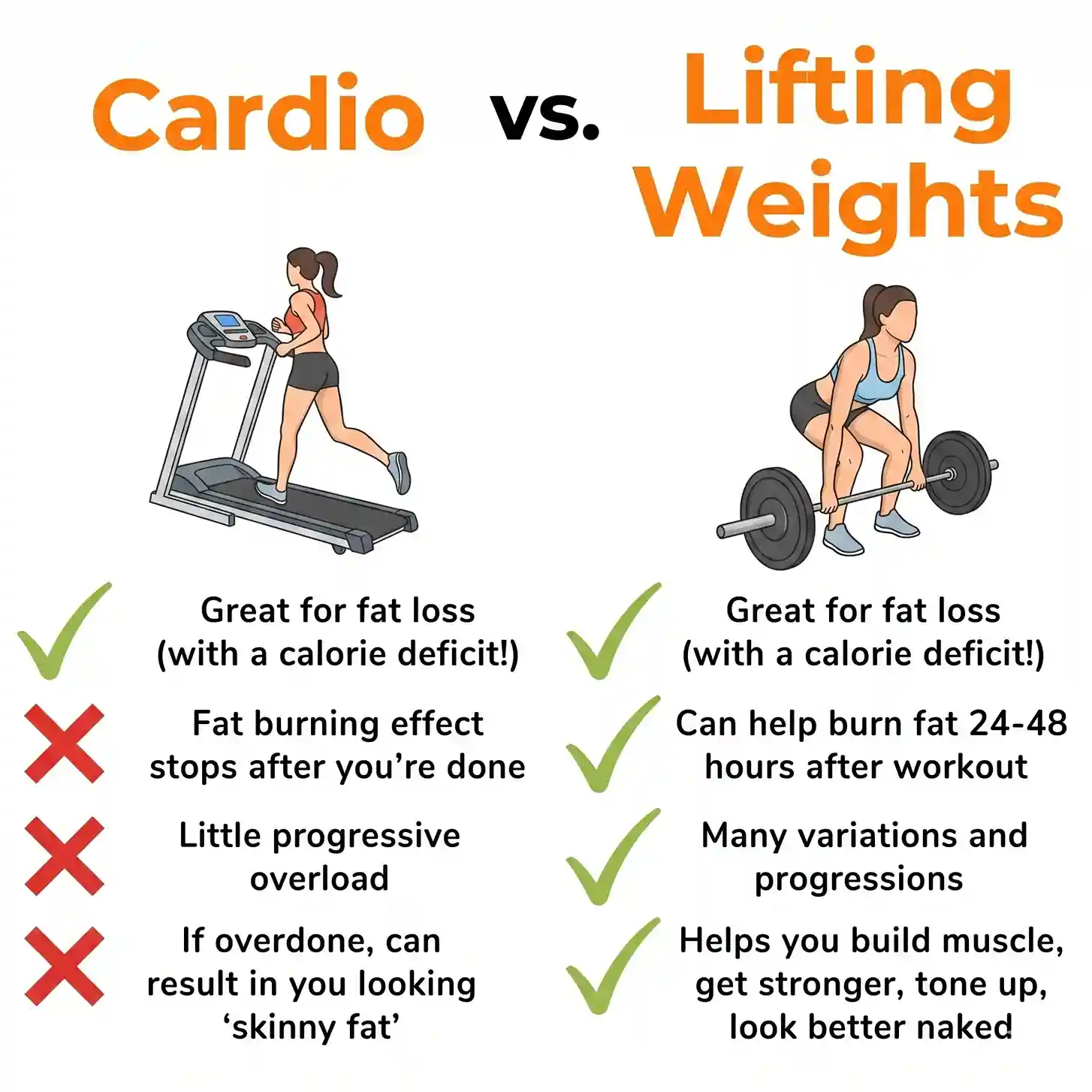
Cardio:
- Burns more calories during the workout
- Great for creating an immediate calorie deficit
Strength Training:
- Builds muscle, which increases resting metabolism
- Helps burn more calories throughout the day
👉 Best approach: Combine both.
Cardio helps you lose weight, while strength training ensures you lose fat—not muscle.
Which Is Better for Muscle Building?
If your goal is muscle growth, strength training is essential. It directly stimulates muscle fibers and promotes hypertrophy.
However, adding light cardio can:
- Improve recovery
- Increase blood flow
- Support overall cardiovascular health
Which Is Better for Heart Health?
Cardio is traditionally seen as the best option for heart health—and for good reason. It strengthens the heart, lowers blood pressure, and improves circulation.
That said, strength training also supports cardiovascular health, especially when performed in circuits or with minimal rest.
👉 For optimal heart health, combining both is ideal.
Strength Training vs. Cardio for Longevity
Research shows that people who do both live longer and healthier lives.
- Cardio reduces the risk of heart disease and stroke
- Strength training prevents muscle loss, improves mobility, and protects bones
👉 The combination of both can significantly reduce overall mortality risk.
Common Myths Debunked
“Cardio Burns Muscle”
Not necessarily. Muscle loss only happens with excessive cardio and poor nutrition. Balanced training preserves muscle.
“Strength Training Doesn’t Help Heart Health”
False. It improves circulation, blood pressure, and overall cardiovascular function.
“You Have to Choose One”
You don’t. The most effective fitness plans include both.
How to Combine Strength Training and Cardio
For the best results, aim for a balanced routine:
Weekly Workout Example:
- 3 days strength training (full body or split workouts)
- 2–3 days cardio (steady-state or HIIT)
- 1 day active recovery (walking, yoga, stretching)
This structure supports muscle growth, fat loss, and overall health.
Choosing Based on Your Goals
For Weight Loss:
- Combine cardio + strength training
- Maintain a calorie deficit
For Muscle Gain:
- Focus on strength training
- Add light cardio for recovery
For Endurance:
- Prioritize cardio
- Include strength training to prevent injury
For General Health:
- Balance both equally
The Psychological Factor
The best workout isn’t just about science—it’s about consistency.
Some people love the rhythm of running, while others thrive on lifting weights. The most effective plan is one you enjoy and can stick to long-term.
Consistency always beats perfection.
The Future of Fitness
Modern fitness trends are moving toward integration rather than separation.
- HIIT workouts combine strength and cardio
- Functional training mimics real-life movements
- Wearable tech tracks heart rate, recovery, and performance
The future isn’t about choosing one—it’s about combining both intelligently.
Final Thoughts: Strength vs. Cardio—Why Not Both?
Asking whether strength training or cardio is better is like asking whether food or water is more important—you need both.
- Cardio strengthens your heart and boosts endurance
- Strength training builds muscle, improves metabolism, and protects your body
The real key is balance.
By combining both forms of exercise, you can build a stronger, healthier, and more resilient body—one that not only looks good but performs well for years to come.
You Might Also Like