
Staying Motivated During Long Fitness Programmes: Evidence-Based Strategies for Sustained Success

Starting a fitness journey often feels exciting—motivation is high, goals are clear, and progress seems inevitable. But as weeks turn into months, that initial energy can fade. Research shows that most people struggle not with starting, but with staying consistent. If you’ve ever lost momentum halfway through a program, you’re not alone.
The good news? Motivation isn’t just something you “have” or “don’t have.” It’s something you can build, structure, and sustain using proven strategies. This guide breaks down the science behind long-term fitness motivation and shows you how to stay consistent—even when progress slows.
Why Motivation Fades Over Time
At the beginning of any fitness program, excitement drives action. But over time, psychological patterns begin to take over.
According to Self-Determination Theory, long-term motivation depends on three core needs:
- Autonomy (feeling in control of your choices)
- Competence (feeling capable and improving)
- Relatedness (feeling connected to others)
When a workout plan feels too restrictive, progress stalls, or you feel isolated, motivation naturally drops.
Another factor is the “hedonic adaptation” effect—your brain gets used to the routine, so the excitement fades. What once felt rewarding becomes normal, and without new stimuli, motivation declines.
Key takeaway: Motivation loss is predictable—but also preventable with the right structure.
Build Smarter Goals for Long-Term Success
Vague goals like “get fit” or “lose weight” rarely sustain motivation. Instead, structured goal-setting systems make consistency easier.
Use SMART Goals
Goals should be:
- Specific
- Measurable
- Achievable
- Relevant
- Time-bound
For example:
- ❌ “Work out more”
- ✅ “Train 4 times per week for 45 minutes”
Create a Goal Hierarchy
Layering your goals keeps you motivated at every stage:
| Goal Type | Timeframe | Example | Benefit |
|---|---|---|---|
| Micro-goals | Daily | Complete a workout | Instant wins |
| Milestones | 2–4 weeks | Increase reps or weight | Visible progress |
| Benchmarks | 2–3 months | Run 5km nonstop | Builds confidence |
| Long-term goals | 6+ months | Complete a marathon | Provides direction |
This structure ensures you always have something to work toward—no matter where you are in your journey.
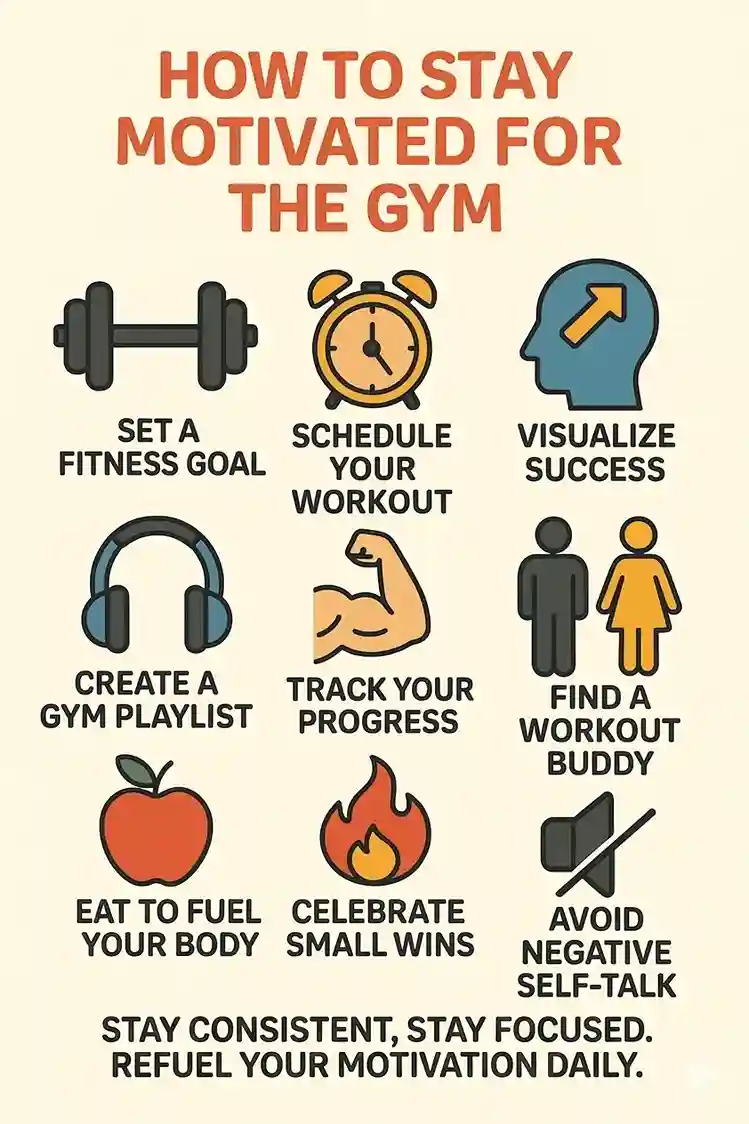
The Power of Social Accountability
Working out alone can make it easier to skip sessions. Adding a social element dramatically improves consistency.
Why It Works
- People are more likely to stick to plans when others are involved
- Accountability creates external motivation
- Shared experiences increase enjoyment
Effective Strategies
- Train with a workout partner
- Join group fitness classes
- Participate in online fitness communities
- Hire a coach or personal trainer
Studies show that having a consistent workout partner can increase adherence by over 30%.
Bottom line: Fitness becomes easier when you’re not doing it alone.
Turn Workouts Into Habits (Not Decisions)
Motivation fluctuates—but habits don’t.
Research suggests it takes about 66 days to build a consistent exercise habit. The key is designing a simple system:
The Habit Loop
- Cue – Trigger your workout (e.g., same time daily)
- Routine – The workout itself
- Reward – Positive reinforcement afterward
Practical Tips
- Lay out your workout clothes in advance
- Schedule workouts at the same time each day
- Keep routines simple and realistic
- Track your progress
The goal isn’t to feel motivated every day—it’s to make exercise automatic.
Avoid Boredom With Strategic Variety
Doing the same workout repeatedly can lead to mental fatigue—even if it’s effective.
How to Keep It Fresh
- Rotate between strength training, cardio, and flexibility work
- Change workout environments (gym, outdoors, home)
- Try new activities (HIIT, yoga, cycling, swimming)
- Set short-term challenges
Research shows that varied programs can improve adherence by over 2× compared to repetitive routines.
The key is balance:
- Too much repetition = boredom
- Too much variety = lack of progress
Find the middle ground.
Develop the Right Mindset
Your mindset plays a huge role in long-term consistency.
Adopt a Growth Mindset
Instead of thinking:
- “I’m not good at this”
Shift to:
- “I’m improving with practice”
Focus on Progress, Not Perfection
Plateaus and setbacks are normal. What matters is consistency over time.
Build Identity-Based Motivation
When you see yourself as:
- “Someone who works out regularly”
Instead of:
- “Someone trying to get fit”
…you’re far more likely to stay consistent.
Mindset shift = long-term success.

Use Technology to Stay on Track
Modern tools can make staying motivated much easier.
Helpful Tools
- Fitness tracking apps
- Smartwatches and wearables
- Progress logs
- Online coaching platforms
Features like:
- Step tracking
- Workout reminders
- Progress charts
…create feedback loops that reinforce consistency.
Gamification (badges, streaks, leaderboards) also helps maintain engagement over time.
Overcoming Plateaus Without Losing Motivation
Plateaus are one of the biggest motivation killers—but they’re also completely normal.
How to Push Through
- Adjust workout intensity or volume
- Try new training methods (e.g., HIIT or strength cycles)
- Track non-scale victories (energy, sleep, mood)
- Focus on skill improvement
Remember: progress isn’t always visible immediately—but it’s still happening.

The Role of Nutrition in Motivation
What you eat directly affects your energy, recovery, and motivation.
Key Principles
- Eat enough to support your activity level
- Prioritize protein for muscle recovery
- Stay hydrated
- Avoid extreme calorie restriction
Poor nutrition often leads to:
- Low energy
- Reduced performance
- Decreased motivation
A balanced approach keeps both your body and mind performing at their best.
Final Thoughts: Consistency Beats Motivation
Motivation will come and go—that’s normal. What matters is building systems that keep you moving forward regardless.
To stay consistent in long fitness programs:
- Set structured, realistic goals
- Build habits, not reliance on motivation
- Stay connected with others
- Keep workouts fresh and engaging
- Focus on long-term progress
The truth is simple:
Success doesn’t come from perfect motivation—it comes from consistent action.
FAQs
How long does it take to build a fitness habit?
On average, about 66 days, though it varies depending on the individual and the complexity of the routine.
What’s the best way to stay accountable?
Workout partners, coaches, and public goal commitments are among the most effective methods.
How do I stay motivated during a plateau?
Change your routine, track different progress metrics, and focus on consistency rather than immediate results.
Does nutrition affect motivation?
Absolutely. Poor nutrition can reduce energy, recovery, and overall drive to train.
Are rewards helpful for motivation?
Small, consistent rewards can help—but long-term success relies more on intrinsic motivation and habit-building.