

Stretching is one of the most widely recommended practices in fitness, rehabilitation, and everyday wellness. Yet many people treat it as an afterthought—something you either rush through or skip entirely.
Understanding the science behind stretching can help you use it more effectively to improve flexibility, prevent injuries, and enhance overall performance.
In this guide, we’ll break down what actually happens inside your body when you stretch, the real benefits, the best time to do it, and common myths you should stop believing.
What Happens to Your Body When You Stretch?
Stretching may feel simple, but it triggers several important physiological processes:
1. Muscle Fiber Lengthening
When you stretch, your muscle fibers elongate as they are pulled into an extended position. Initially, this change is temporary. However, with consistent practice, your muscles adapt, allowing for greater long-term flexibility.
2. Nervous System Response
Your nervous system plays a protective role during stretching.
- Muscle sensors (muscle spindles) detect length changes
- They trigger the stretch reflex to prevent overstretching
Over time, your body becomes more tolerant, allowing a wider range of motion. This is why stretching should feel like gentle tension—not pain.
3. Connective Tissue Adaptation
Stretching doesn’t just affect muscles—it also impacts:
- Tendons
- Fascia (connective tissue surrounding muscles)
Regular stretching improves their elasticity and hydration, leading to smoother, more efficient movement.
4. Increased Blood Circulation
Stretching boosts blood flow, delivering:
- Oxygen
- Nutrients
It also helps remove metabolic waste like lactic acid, which can:
- Reduce soreness
- Speed up recovery
Key Benefits of Stretching
When done consistently and correctly, stretching offers powerful benefits:
✔ Improved Flexibility & Mobility
Greater range of motion leads to better movement efficiency and reduced injury risk.
✔ Better Posture
Stretching tight muscles (like hip flexors, chest, and hamstrings) helps correct imbalances—especially for people who sit a lot.
✔ Injury Prevention
Flexible muscles and tendons are less prone to strains and tears during sudden movements.
✔ Reduced Muscle Tension
Stretching relieves stiffness and discomfort, particularly after long periods of inactivity or intense workouts.
✔ Faster Recovery
Post-workout stretching supports muscle recovery and helps return muscles to their resting state.
When Is the Best Time to Stretch?
Timing matters. Different types of stretching serve different purposes.
✅ Dynamic Stretching (Before Exercise)
Dynamic stretching involves controlled, active movements that mimic your workout.
Benefits:
- Raises heart rate and body temperature
- Prepares muscles and joints
- Improves coordination and performance
Examples:
- High knees
- Arm circles
- Leg swings
- Butt kicks
✅ Static Stretching (After Exercise)
Static stretching involves holding a stretch for 30–60 seconds.
Benefits:
- Reduces muscle stiffness
- Improves long-term flexibility
- Promotes relaxation
Examples:
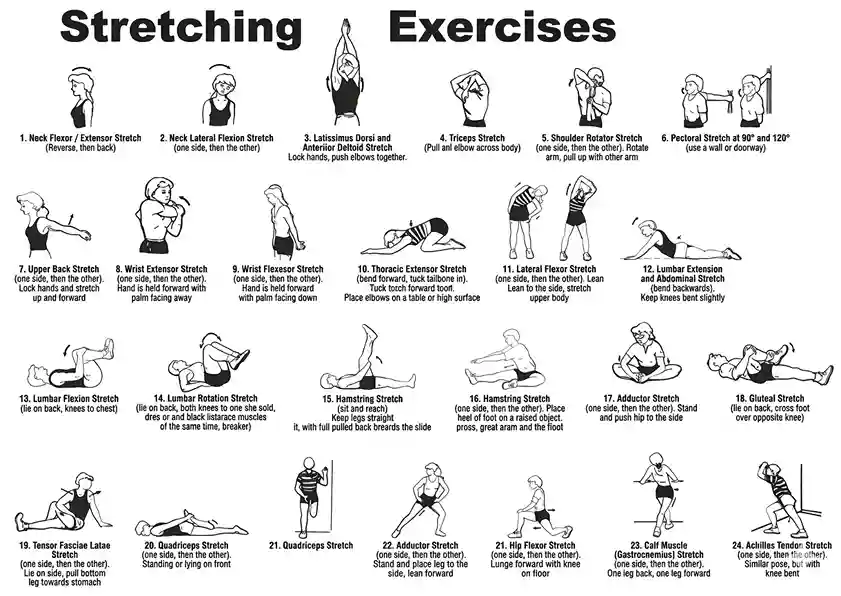
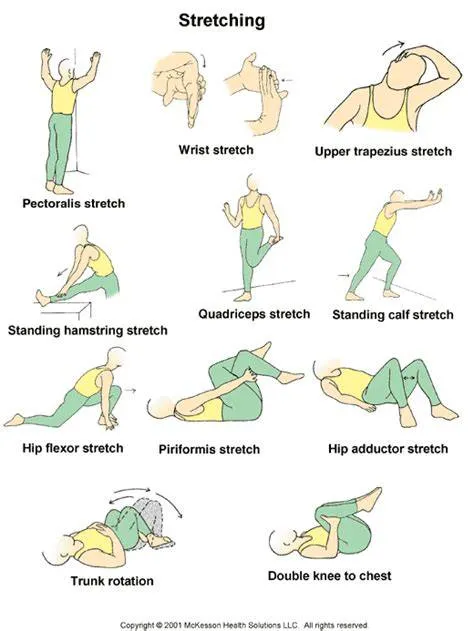
- Hamstring stretch
- Calf stretch
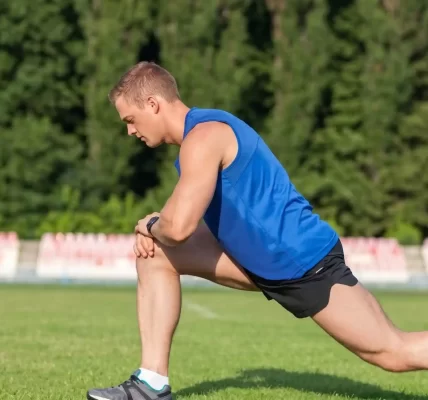
- Hip flexor stretch
🕒 Other Good Times to Stretch
- After a warm shower (muscles are more pliable)
- During work breaks (to relieve sitting tension)
- Before bed (to relax and improve sleep quality)
Common Stretching Myths (Debunked)
❌ Myth 1: Stretching prevents all injuries
Truth: It reduces risk—but must be combined with strength training and proper technique.
❌ Myth 2: You should always stretch before workouts
Truth: Static stretching before intense exercise can reduce strength. Use dynamic warm-ups instead.
❌ Myth 3: Stretching should hurt to be effective
Truth: Pain is a warning sign. Stretching should feel like mild tension—not discomfort.
❌ Myth 4: If you’re not flexible, stretching won’t help
Truth: Flexibility improves with consistency—everyone starts somewhere.
How to Build an Effective Stretching Routine
To get the most out of stretching:
- Stay consistent (daily or several times per week)
- Combine dynamic + static stretching
- Focus on major muscle groups
- Avoid bouncing or forcing movements
- Breathe deeply and relax into each stretch
Why Stretching Matters More Than You Think
Stretching isn’t just a warm-up or cool-down—it’s a key component of musculoskeletal health.
It helps you:
- Move better
- Feel less stiff
- Recover faster
- Reduce long-term injury risk
Whether you’re an athlete, office worker, or beginner, stretching supports your body at every stage.
Final Thoughts
Stretching is a simple yet powerful tool—but only when used correctly. By understanding the science behind it, you can:
- Improve flexibility safely
- Enhance performance
- Prevent unnecessary injuries
Most importantly, remember that no routine is one-size-fits-all. Your flexibility, mobility, and recovery needs are unique.
If you’re dealing with stiffness, pain, or limited mobility, consider working with a qualified professional to create a personalized stretching plan that fits your body and goals.
FAQs
How often should I stretch?
Ideally 3–5 times per week, or daily for best results.
How long should I hold a stretch?
Hold static stretches for 30–60 seconds.
Can stretching improve posture?
Yes. It helps correct muscle imbalances that lead to poor posture.