

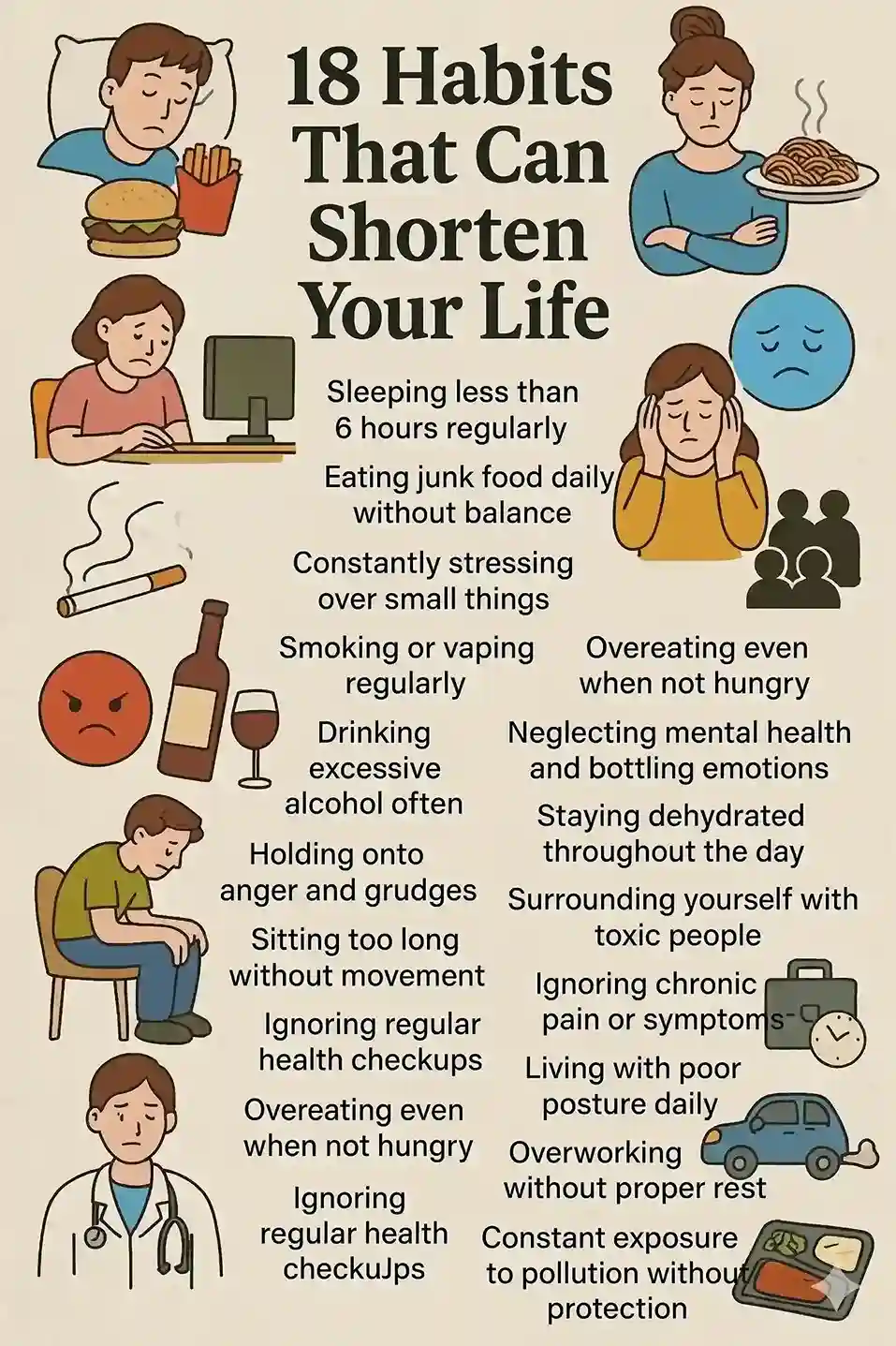
In today’s fast-paced, convenience-driven world, many of our daily habits seem harmless—but over time, they can silently damage our physical and mental health. From excessive screen time to poor sleep routines, these small behaviors often go unnoticed until they start causing real problems.
This article uncovers 18 common everyday habits that may be harming your health, along with practical tips to help you make smarter, healthier choices.
Why Everyday Habits Matter
Your daily routine plays a major role in your long-term well-being. Even minor, repeated behaviors can accumulate into serious health risks, affecting everything from your metabolism and heart health to your mental clarity and emotional stability.
By identifying these hidden risks early, you can take proactive steps toward a healthier lifestyle.
1. Excessive Screen Time
Spending hours on phones, computers, or tablets can lead to digital eye strain, headaches, and poor sleep. Blue light exposure disrupts your circadian rhythm, making it harder to fall asleep.
Tip: Follow the 20-20-20 rule—every 20 minutes, look at something 20 feet away for 20 seconds.
2. Skipping Breakfast
Skipping breakfast may lead to overeating later and slower metabolism. It can also reduce energy and focus throughout the day.
Tip: Choose balanced meals with protein, fiber, and healthy carbs to fuel your morning.
3. Poor Sleep Habits
Irregular sleep schedules and late-night screen use can lead to chronic sleep deprivation, increasing the risk of obesity, diabetes, and heart disease.
Tip: Maintain a consistent sleep routine and limit screen exposure before bed.
4. Overusing Antibacterial Products
Excessive use of antibacterial soaps can disrupt your body’s natural microbiome, weakening your immune system.
Tip: Use regular soap and water for daily hygiene and reserve antibacterial products for necessary situations.
5. Sitting for Too Long
A sedentary lifestyle is linked to obesity, type 2 diabetes, and cardiovascular issues. It can also cause back and neck pain.
Tip: Take regular movement breaks, stretch, or try a standing desk.
6. Not Drinking Enough Water
Dehydration can cause fatigue, poor concentration, and mood swings—even mild dehydration impacts performance.
Tip: Aim for at least 6–8 glasses of water daily and include water-rich foods.
7. Ignoring Mental Health
Chronic stress, anxiety, and depression can manifest physically and increase the risk of serious illnesses.
Tip: Practice self-care, mindfulness, and seek professional help when needed.
8. Unhealthy Snacking
Frequent consumption of processed snacks high in sugar and fat contributes to weight gain and poor nutrition.
Tip: Replace junk food with fruits, nuts, yogurt, or whole-grain options.
9. Mindless Eating
Eating while distracted often leads to overeating and poor food choices.
Tip: Practice mindful eating—focus on your meals and listen to hunger cues.
10. Poor Driving Posture
Bad posture while driving can lead to chronic back and neck pain.
Tip: Adjust your seat, use lumbar support, and take breaks during long drives.
11. Neglecting Oral Health
Poor dental hygiene is linked to gum disease, which can increase the risk of heart disease and diabetes.
Tip: Brush twice daily, floss regularly, and schedule dental check-ups.
12. Drinking Sugary Beverages
Sugary drinks contribute to obesity, diabetes, and tooth decay.
Tip: Opt for water, herbal tea, or unsweetened beverages.
13. Skipping Sunscreen
Ignoring sun protection increases the risk of skin cancer and premature aging.
Tip: Use broad-spectrum sunscreen (SPF 30+) daily—even on cloudy days.
14. Too Much Caffeine
Excessive caffeine intake can cause anxiety, sleep problems, and heart palpitations.
Tip: Limit intake and find natural energy boosters like exercise and proper nutrition.
15. Avoiding Regular Check-Ups
Skipping medical appointments can delay the diagnosis of serious conditions.
Tip: Schedule routine health screenings and follow preventive care guidelines.
16. Ignoring Your Body’s Signals
Pushing through pain or fatigue can worsen underlying issues and lead to burnout.
Tip: Listen to your body and rest or seek medical advice when needed.
17. Oversized Portions
Large portion sizes can lead to unintentional overeating and weight gain.
Tip: Use smaller plates and pay attention to portion control.
18. Overusing Social Media
Excessive social media use can negatively impact mental health, causing anxiety and low self-esteem.
Tip: Set time limits and prioritize real-life interactions.
Final Thoughts
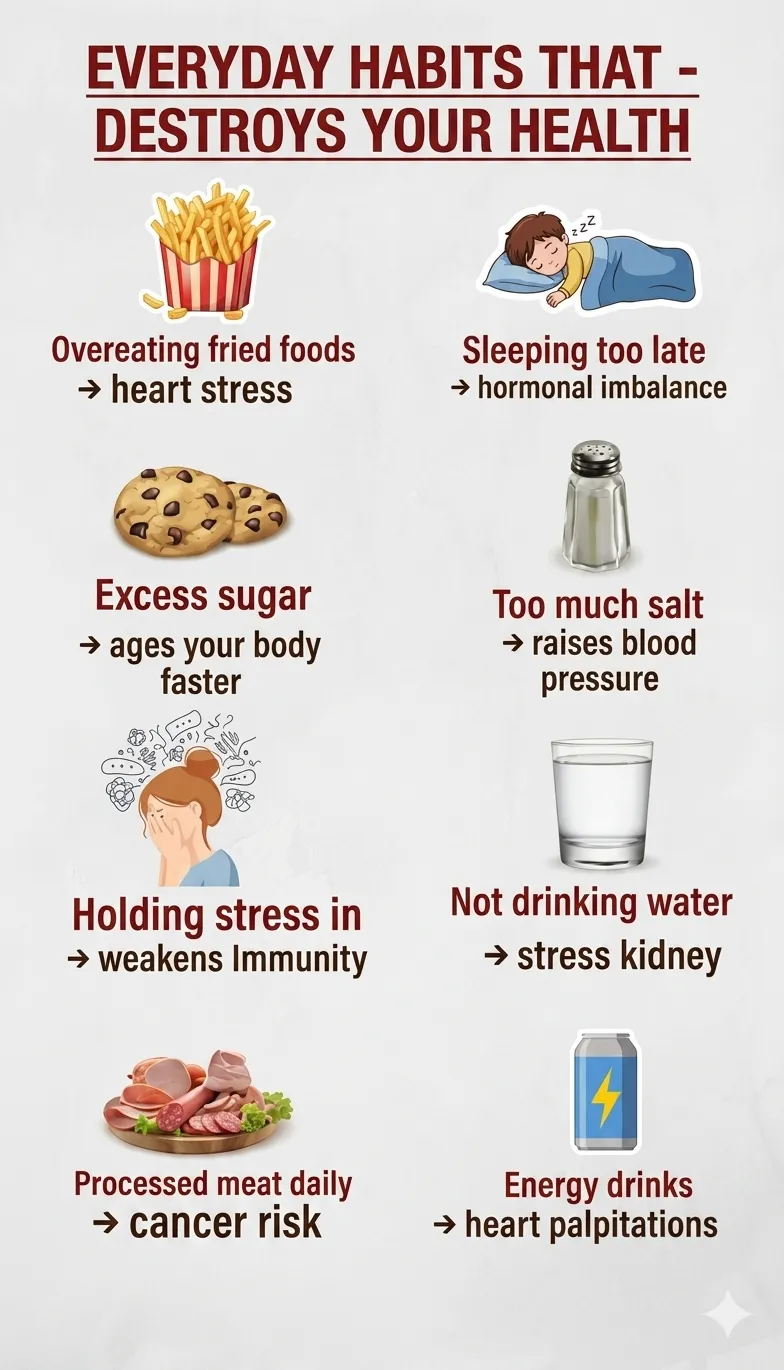
Your health isn’t shaped by one big decision—it’s built through small, everyday habits. While these behaviors may seem insignificant, they can quietly accumulate into serious health concerns over time.
The key is awareness. By recognizing these hidden risks and making simple adjustments, you can protect your well-being and build a healthier, more balanced life.