Effects of Sleep Deprivation: How Lack of Sleep Impacts Your Health and Performance

We’ve all experienced a restless night—waking up groggy, unfocused, and low on energy. But occasional poor sleep is very different from sleep deprivation, a condition that can seriously affect your physical health, mental clarity, and overall well-being.
Whether it’s caused by a busy schedule, stress, or poor sleep habits, not getting enough sleep can lead to consequences that go far beyond feeling tired.
What Is Sleep Deprivation?
Sleep deprivation occurs when you don’t get enough sleep to meet your body’s needs. It can be divided into two main types:
- Complete sleep deprivation: Staying awake for 24 hours or more
- Partial sleep deprivation: Getting less sleep than needed over one or more nights
Both types can negatively impact your body and mind—even after just a short period.
Effects of Complete Sleep Deprivation
Complete sleep deprivation typically happens when you pull an all-nighter or stay awake for an extended period. As your waking hours increase, your body begins to show clear signs of fatigue.
1. Impaired Cognitive Function
After 16–17 hours of being awake, your brain starts to slow down. You may notice:
- Difficulty concentrating
- Slower reaction times
- Trouble completing simple tasks
Research shows that staying awake for 24 hours can impair performance as much as having a blood alcohol level of 0.10%.
2. Increased Risk of Accidents
Lack of sleep significantly reduces alertness, making activities like driving extremely dangerous.
Common risks include:
- Falling asleep at the wheel
- Reduced attention span
- Poor decision-making
Sleep deprivation is a major factor in many traffic and workplace accidents each year.
3. Mood Changes and Emotional Instability
After 48–72 hours without sleep, emotional regulation becomes difficult. You may experience:
- Irritability
- Anxiety
- Mood swings
- Increased stress
In some cases, prolonged sleep loss can even contribute to symptoms of depression.
4. Disruption of Circadian Rhythms
Your body follows a natural internal clock called the circadian rhythm. Sleep deprivation disrupts this cycle, causing:
- Extreme sleepiness during the afternoon and night
- Sudden “microsleeps” (falling asleep briefly without noticing)
- Difficulty staying awake during routine activities
Effects of Partial Sleep Deprivation
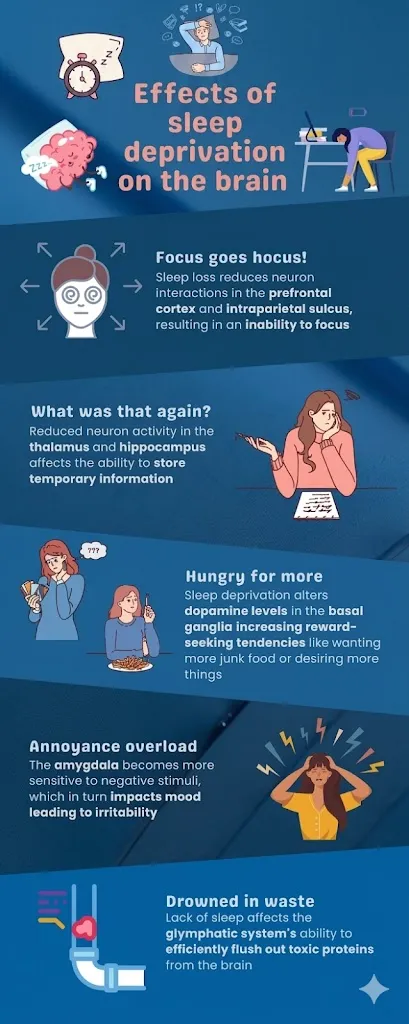
Partial sleep deprivation is more common and often goes unnoticed. It occurs when you consistently get less sleep than your body needs.
1. Accumulated Sleep Debt
Missing just a few hours of sleep each night builds up a sleep debt over time. While you may still function, your performance gradually declines.
2. Reduced Productivity and Focus
After several nights of poor sleep, you may notice:
- Difficulty handling complex tasks
- Decreased concentration
- Slower thinking and reaction times
This can impact both work performance and daily responsibilities.
3. Physical Symptoms
Chronic sleep deprivation can lead to a range of physical issues, including:
- Headaches
- Digestive problems
- Joint or muscle discomfort
- Persistent fatigue
4. Memory and Learning Difficulties
Sleep plays a key role in memory consolidation. Without enough rest, your brain struggles to process and retain information, making learning and recall more difficult.
5. Higher Risk of Accidents
Even mild sleep deprivation increases the likelihood of:
- Workplace errors
- Driving accidents
- Reduced awareness of surroundings
Long-Term Health Risks of Sleep Deprivation
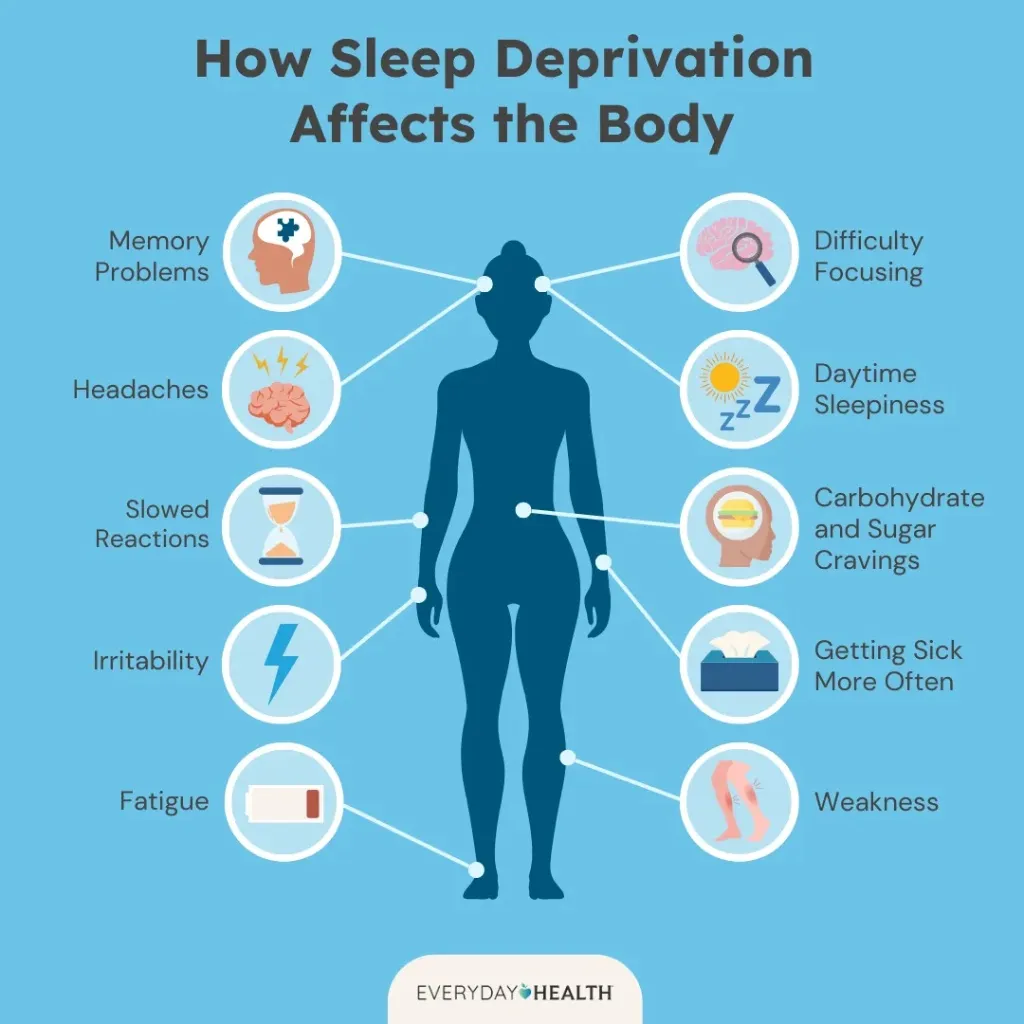
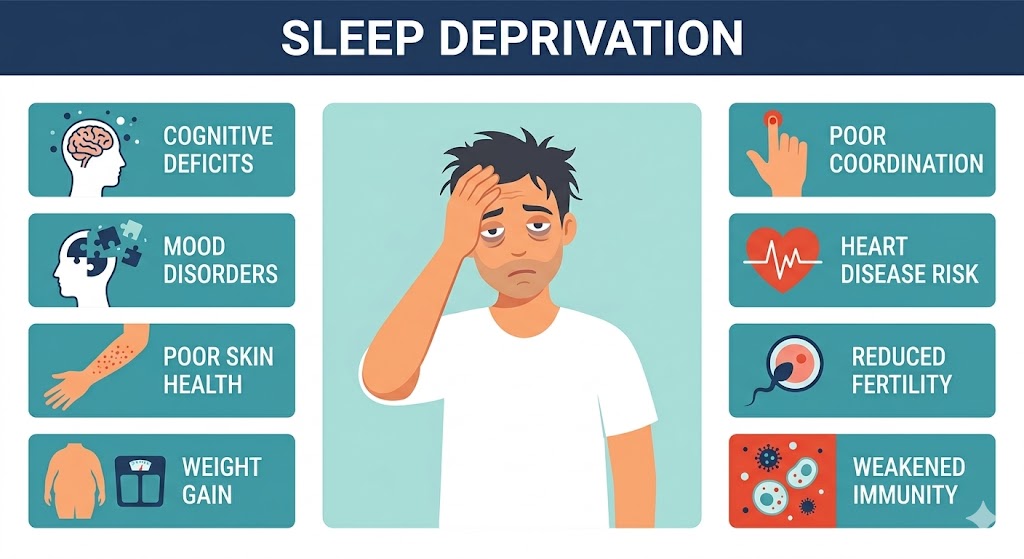
If sleep deprivation continues over weeks, months, or years, it can lead to serious health problems, such as:
- Weight gain and metabolic issues
- Increased risk of heart disease
- Weakened immune system
- Higher risk of anxiety and depression
Long-term sleep loss is especially common among people with insomnia, demanding work schedules, or excessive screen time.
Why Sleep Is Essential for Your Body
Sleep is not just a time of rest—it’s when your body performs critical functions, including:
- Repairing tissues and muscles
- Regulating hormones
- Strengthening the immune system
- Processing memories and emotions
Without enough sleep, these processes are disrupted, affecting your overall health.
Can You Recover From Sleep Deprivation?
The good news is that many effects of sleep deprivation are reversible. Catching up on sleep can help restore:
- Energy levels
- Cognitive function
- Mood balance
However, repeatedly relying on “catch-up sleep” is not a long-term solution.
Tips to Improve Your Sleep Quality
To prevent sleep deprivation, consider adopting healthier sleep habits:
- Maintain a consistent sleep schedule
- Limit screen time before bed
- Create a comfortable sleep environment
- Avoid caffeine late in the day
- Manage stress through relaxation techniques
If sleep problems persist, it’s important to consult a healthcare professional to identify underlying causes.
Final Thoughts
Sleep deprivation is more than just feeling tired—it can affect your safety, productivity, and long-term health. Whether it’s a single sleepless night or ongoing sleep loss, the impact on your body is significant.
Prioritizing sleep is one of the simplest and most effective ways to improve your overall well-being. Start by making small changes to your daily routine, and give your body the rest it truly needs.