
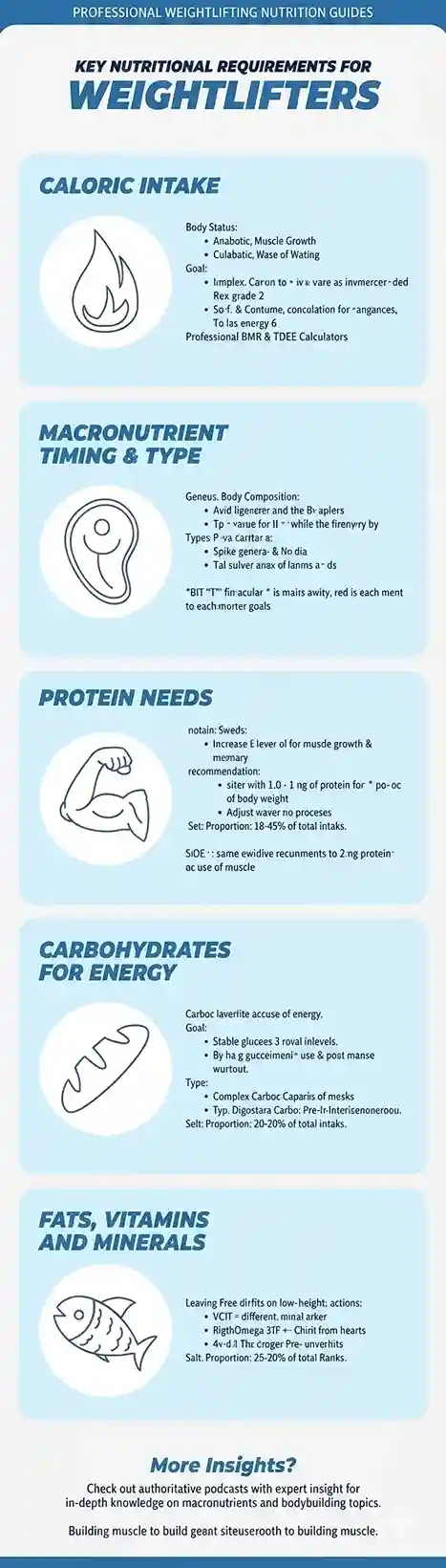
1. Caloric Intake: Surplus vs Deficit
To build muscle, you must consume more calories than you burn (caloric surplus).
Muscle gain: Caloric surplus
Fat loss: Caloric deficit
Your body is always in one of two states:
Anabolic (building muscle)
Catabolic (breaking down tissue)
For strength and size, staying in an anabolic state is essential.
2. Meal Timing and Frequency
Nutrient timing plays a critical role in performance and recovery.
Eat 3–6 balanced meals per day
Focus on whole foods for stable energy levels
Avoid constant spikes in blood sugar throughout the day
However, around workouts:
Pre- and post-workout meals should include fast-digesting carbs and protein
This helps spike insulin and deliver nutrients directly to muscles
Pro Tip: Start simple. Focus on consistency before perfecting every macro.
Protein Intake for Muscle Growth
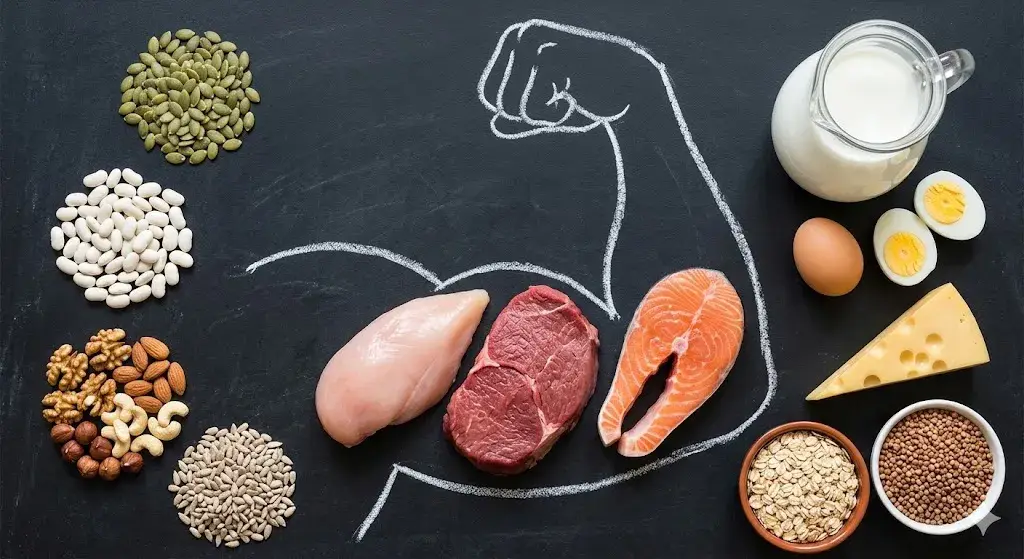
Protein is the foundation of muscle development. It provides the amino acids needed to repair and build muscle tissue.
Recommended Intake
1.0 – 1.5g of protein per pound of body weight
Typically 30–40% of total daily calories
Higher intake may be beneficial for advanced athletes due to:
Increased training intensity
Greater muscle damage
Enhanced recovery demands
Best Protein Sources
Lean meats (chicken, beef, turkey)
Fish (salmon, tuna)
Eggs
Dairy (Greek yogurt, milk)
Plant-based proteins (lentils, tofu)
Carbohydrates for Energy
Carbohydrates are your body’s primary energy source, especially during high-intensity weight training.
They are stored in muscles as glycogen, which fuels performance.
Key Principles
Avoid excessive sugar spikes throughout the day
Use carbs strategically around workouts
Best Carb Strategy
Before/after workouts: Fast-digesting carbs (e.g., rice cakes, fruit)
Daily meals: Complex carbs (e.g., oats, brown rice, sweet potatoes)
Recommended Intake
Typically 30–50% of total calories, depending on goals
Fats, Vitamins, and Minerals
Healthy fats are essential—not something to avoid.
Benefits of Healthy Fats
Support hormone production (including testosterone)
Improve nutrient absorption
Aid digestion
Provide long-lasting energy
Good Fat Sources
Avocados
Nuts and seeds
Olive oil
Fatty fish
Micronutrients Matter Too
Vitamins and minerals play a crucial role in:
Muscle contraction
Recovery
Immune function
Energy metabolism
Make sure your diet includes:
Vegetables (leafy greens, broccoli)
Fruits (berries, bananas)
Whole foods over processed options
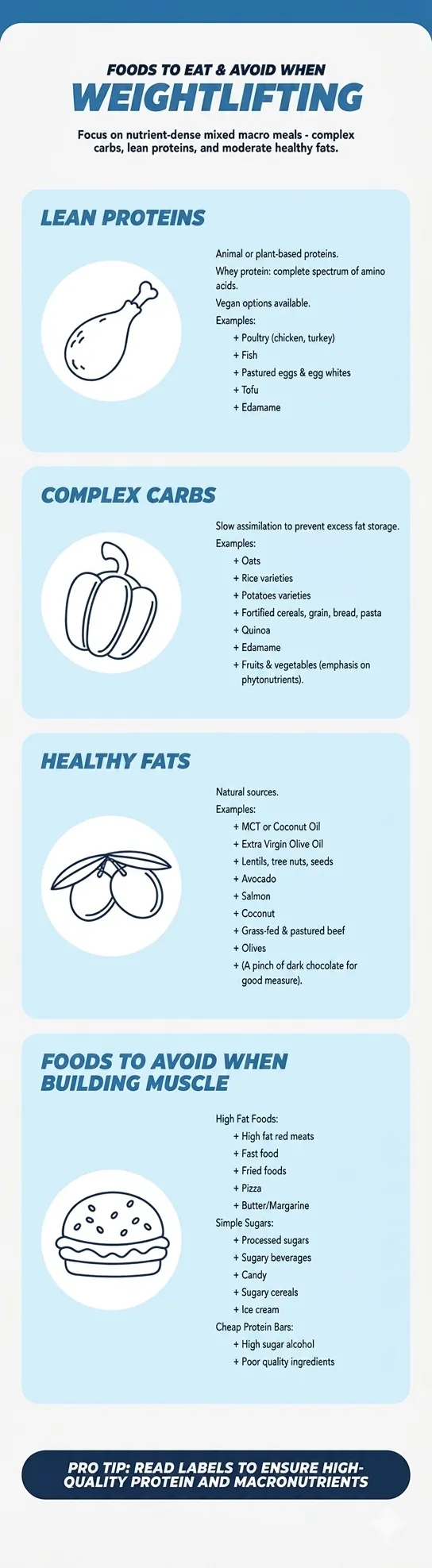
Foods to Eat When Weight Lifting
For optimal performance and growth, prioritize:
Lean protein sources
Complex carbohydrates
Healthy fats
High-fiber vegetables
Whole, minimally processed foods
Foods to Avoid When Building Muscle
Limit or avoid:
Highly processed foods
Excess sugar
Trans fats
Alcohol (can impair recovery and hormone balance)
Conclusion
A well-structured weight lifting diet is the foundation of muscle growth and strength development. Training breaks your muscles down—but nutrition builds them back stronger.
Focus on:
Caloric surplus
High protein intake
Strategic carbohydrate use
Healthy fats and micronutrients
Consistency over perfection
Master your nutrition, and you’ll maximize every rep you put in at the gym.