

Self-discipline is one of the most powerful traits you can develop if you want to improve your life. It influences nearly every aspect of your daily routine, from your productivity and health to your mindset and long-term success. When practiced consistently, self-discipline creates a positive ripple effect, helping you stay focused, make better decisions, and achieve your goals.
On the other hand, a lack of discipline can lead to procrastination, poor habits, and missed opportunities. The good news is that self-discipline is not something you are born with—it is a skill that can be developed through daily habits and intentional actions.
In this article, you will discover seven powerful daily habits that can help you build self-discipline and take control of your life.
Why Self-Discipline Matters
Self-discipline is the ability to do what needs to be done, even when you don’t feel like doing it. It is the foundation of success in areas such as career growth, personal development, health, and relationships.
When you build strong self-discipline, you are more likely to stay consistent, overcome challenges, and remain committed to your long-term goals. It helps you resist distractions, manage your time effectively, and maintain a clear sense of purpose.
Start with Small Daily Goals
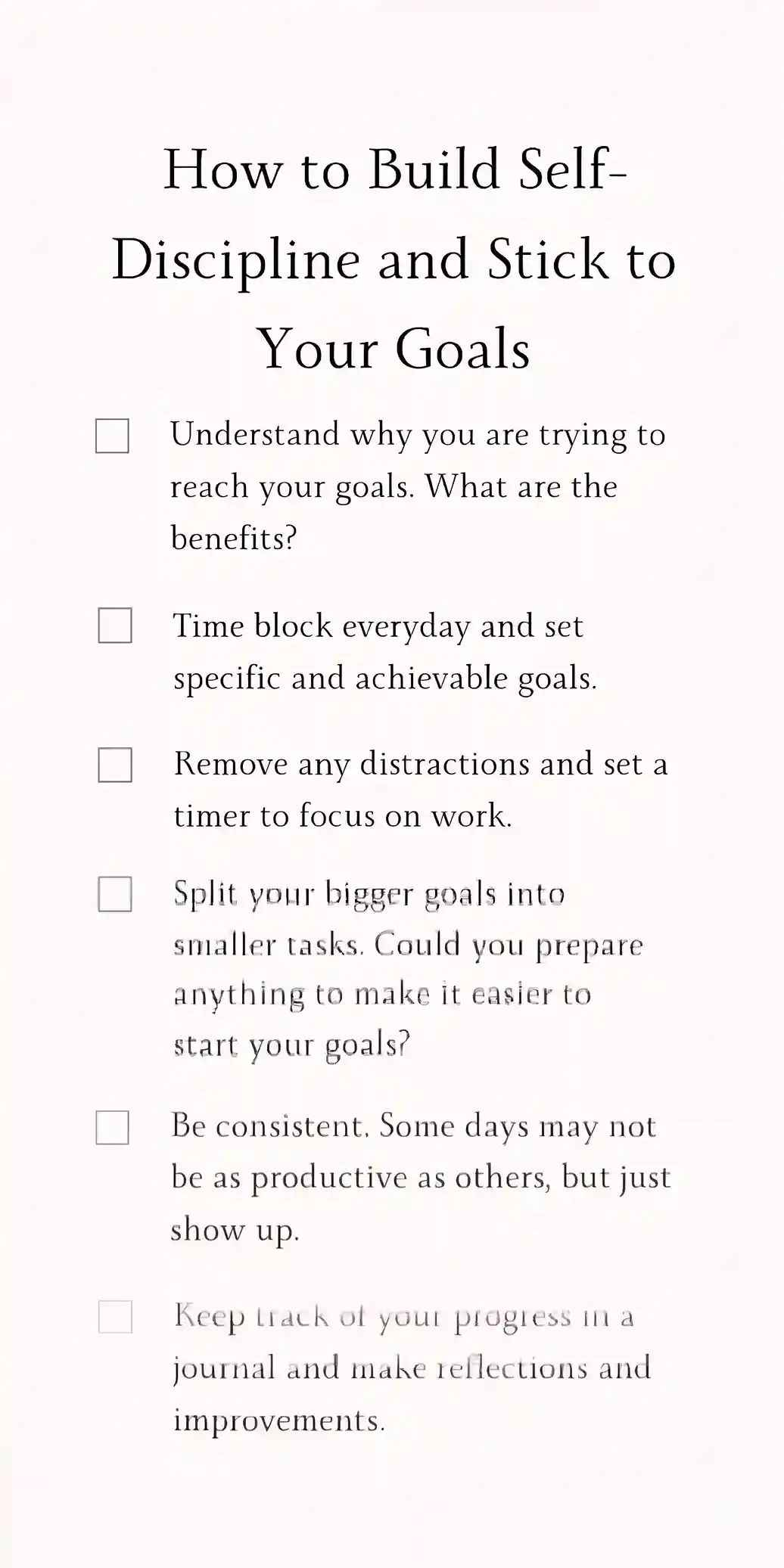
One of the most effective ways to build self-discipline is by setting small, achievable goals every day. Large goals can feel overwhelming, but smaller tasks are easier to complete and provide a sense of accomplishment.
When you complete even the simplest tasks, such as replying to an important email or organizing your workspace, you reinforce a habit of taking action. Over time, these small wins build momentum and strengthen your discipline.
Consistency is key. By turning daily tasks into a routine, you train your mind to follow through on commitments.

Keep Your Goals Visible
In a world full of distractions, it is easy to lose sight of what truly matters. Keeping your goals visible can help you stay focused and motivated throughout the day.
Whether you write them on a notebook, place them on your desk, or set them as your phone wallpaper, constant reminders can influence your behavior. When you see your goals regularly, you are more likely to take action toward achieving them.
Visualization also plays an important role in discipline. When you clearly see what you are working toward, it becomes easier to stay committed.
Learn to Prioritize What Matters
Not all tasks are equally important. Understanding how to prioritize is essential for building self-discipline and managing your time effectively.
When everything feels urgent, it becomes difficult to focus. That is why it is important to identify what truly matters and concentrate your energy on high-impact activities.
By organizing your tasks and focusing on what is important rather than what is easy, you create a structured approach to your day. This habit helps you stay productive and avoid wasting time on unnecessary distractions.
Prepare for Challenges and Adversity
Life is unpredictable, and challenges are inevitable. Developing self-discipline means being prepared for difficult situations and knowing how to respond to them.
Instead of being caught off guard, take time to think about potential obstacles and how you will handle them. This mental preparation helps you stay on track when things don’t go as planned.
When you understand adversity, you become more resilient. Rather than giving up, you learn to adapt and continue moving forward toward your goals.
Eliminate Distractions
Distractions are one of the biggest obstacles to self-discipline. From social media notifications to everyday interruptions, it is easy to lose focus.
Building discipline requires creating an environment that supports productivity. This may mean turning off notifications, setting boundaries, or working in a quiet space.
The key is to remove distractions before they interfere with your work. When you control your environment, you also control your ability to stay focused and disciplined.
Be Honest About Your Weaknesses
Everyone has weaknesses, and recognizing them is an important step toward self-improvement. Instead of ignoring your struggles, take time to understand what holds you back.
When you are aware of your weaknesses, you can create strategies to avoid or manage them. This level of self-awareness allows you to make better decisions and stay aligned with your goals.
Self-discipline is not about being perfect. It is about understanding yourself and making consistent efforts to improve.
Find an Accountability Partner
Building self-discipline becomes easier when you have someone to support and motivate you. An accountability partner can help you stay committed to your goals and provide valuable feedback.
This person can be a friend, mentor, or colleague who encourages you and keeps you on track. Knowing that someone else is aware of your goals can increase your sense of responsibility.
Accountability also helps you stay motivated during difficult times. With the right support system, you are more likely to remain consistent and focused.
The Long-Term Benefits of Self-Discipline
Developing self-discipline offers numerous benefits that extend far beyond productivity. It improves your mental strength, enhances your decision-making skills, and increases your ability to achieve long-term goals.
People with strong self-discipline are often more resilient, confident, and successful. They are better equipped to handle stress, stay focused, and maintain a positive mindset.
Over time, the habits you build today will shape the person you become tomorrow.
Conclusion
Self-discipline is not built overnight, but with consistent effort and the right habits, it
is completely achievable. By setting small goals, staying focused, managing distractions, and holding yourself accountable, you can develop the discipline needed to succeed in any area of your life.
The journey to self-discipline begins with simple daily actions. Start small, stay consistent, and trust the process. With time, you will notice significant changes in your mindset, productivity, and overall quality of life.
Your future success depends on what you do today.