

Starting your day with intention can transform not only how productive you are—but also how you feel. A well-designed morning routine sets the tone for focus, energy, and emotional balance, helping you navigate daily challenges with clarity and confidence.
In this guide, you’ll discover science-backed morning habits, practical tips, and a simple plan to build a routine that enhances both productivity and mood.
Why Morning Routines Matter
Your morning is more than just the beginning of the day—it’s a foundation for success.
A structured routine helps you:
- Improve focus and mental clarity by priming your brain for problem-solving
- Reduce stress through intentional, calming activities
- Build discipline with consistent daily habits
- Boost energy levels by aligning with your natural body clock
- Stay goal-oriented with clear priorities from the start
Research consistently shows that people with structured mornings experience higher productivity, better mental health, and greater life satisfaction.
Key Components of an Effective Morning Routine
To create a high-impact routine, focus on balancing physical, mental, and organizational habits.
1. Wake Up at the Same Time Daily
Consistency regulates your circadian rhythm, improving sleep quality and energy levels. Avoid the snooze button—it disrupts alertness and focus.
2. Hydrate Immediately
Drinking water after waking helps:
- Replenish fluids
- Boost metabolism
- Improve cognitive function
Tip: Add lemon for a refreshing vitamin C boost.

3. Move Your Body
Even light exercise can:
- Increase energy
- Improve mood through endorphins
- Reduce stiffness
Try stretching, yoga, or a quick 10-minute workout.
4. Practice Mindfulness or Meditation
Mindfulness helps you:
- Lower stress levels
- Improve focus
- Strengthen emotional control
Just 5–15 minutes of meditation or journaling can make a difference.
5. Eat a Balanced Breakfast
Fuel your body with:
- Protein (eggs, yogurt)
- Healthy fats (nuts, seeds)
- Complex carbs (oats, whole grains)
Avoid sugary foods that cause energy crashes.
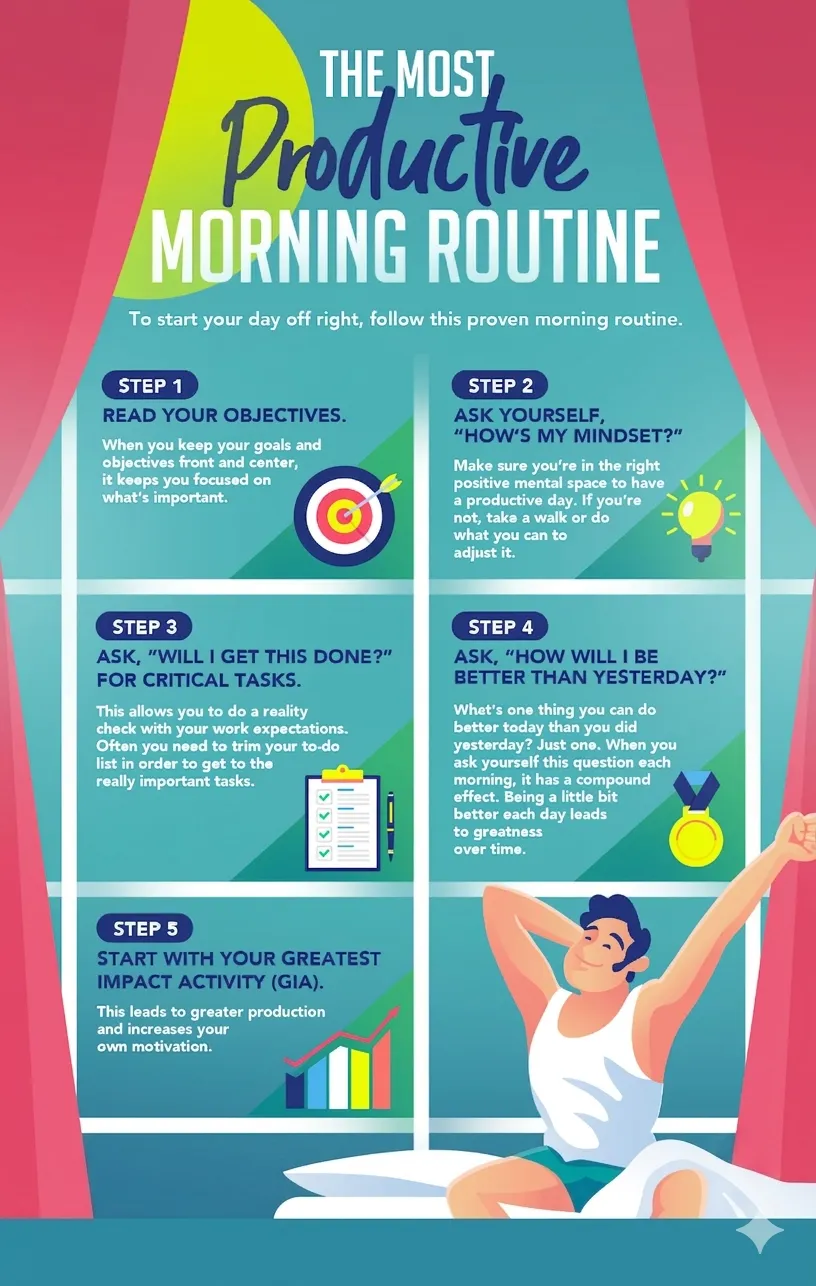
6. Plan Your Day
Organizing your tasks early:
- Reduces anxiety
- Improves efficiency
- Keeps you aligned with your goals
Use tools like time-blocking or priority lists.
7. Limit Early Screen Time
Avoid checking emails or social media immediately. This prevents distraction and helps you stay intentional with your morning.
Sample Morning Routine
Here’s a simple, effective routine you can follow:
- 6:00 AM – Wake up & drink water
- 6:05–6:20 AM – Meditation or journaling
- 6:20–6:45 AM – Light exercise
- 6:45–7:00 AM – Shower & get ready
- 7:00–7:20 AM – Healthy breakfast
- 7:20–7:35 AM – Plan your day
- 7:35–8:00 AM – Quiet focus (reading or creative work)
Adjust timing based on your lifestyle, but keep the structure consistent.
The Science Behind Morning Routines
Hormonal Benefits
- Cortisol peaks in the morning, helping you feel alert
- Sunlight exposure regulates melatonin, improving sleep later
Cognitive Benefits
- Better decision-making
- Improved memory and focus
- Reduced decision fatigue
Emotional Benefits
- Lower anxiety
- Increased dopamine and serotonin
- More stable mood throughout the day
How to Customize Your Routine
Your routine should match your lifestyle:
- Night owls: Gradually shift wake-up times earlier
- Busy parents: Focus on short, high-impact habits
- Professionals: Prioritize planning and focus time
- Creatives: Use mornings for deep, uninterrupted work
Consistency matters more than perfection.
Mood-Boosting Habits to Add
Enhance your routine with these simple practices:
- Gratitude journaling (list 3 things you’re thankful for)
- Positive affirmations to build confidence
- Sunlight or nature exposure for energy and mood
- Music or podcasts for motivation
- Visualization to mentally prepare for success
Common Challenges (and How to Overcome Them)
1. No Time?
Start with just 5–10 minutes and build gradually.
2. Hard to Wake Up?
Improve sleep habits and reduce screen time at night.
3. Lack of Motivation?
Use habit-tracking apps or accountability partners.
4. Frequent Distractions?
Create a quiet, dedicated morning space.
Benefits Beyond Productivity
A strong morning routine impacts your entire life:
- Better decision-making
- Increased creativity
- Improved physical health
- Stronger relationships
- Better work-life balance
It’s not just about getting more done—it’s about living better.
Tools to Support Your Routine
Consider using:
- Habit apps: Track consistency
- Meditation apps: Guided mindfulness
- Journals: Reflect and plan
- Smart lighting: Simulate sunrise
- Minimalist workspace: Reduce distractions
30-Day Plan to Build Your Routine
- Week 1: Focus on waking up consistently + hydration
- Week 2: Add movement or exercise
- Week 3: Introduce meditation or journaling
- Week 4: Add planning and reading
Small steps lead to lasting habits.
Conclusion
A well-crafted morning routine is one of the most powerful tools for improving your productivity and mood. By waking up consistently, staying active, practicing mindfulness, and planning your day, you create a strong foundation for success.
Remember: it’s not about doing everything perfectly—it’s about starting your day with intention and consistency.